
Too busy playing to drink: our journey with toddler constipation
Our daughter was too busy playing to drink, and it led to bad constipation. Here's our honest story and what helped our family.
This one is close to our hearts. It's not a product post. It's a bit of our own story, shared in case it helps another parent who is where we were not so long ago.
Too busy playing to drink
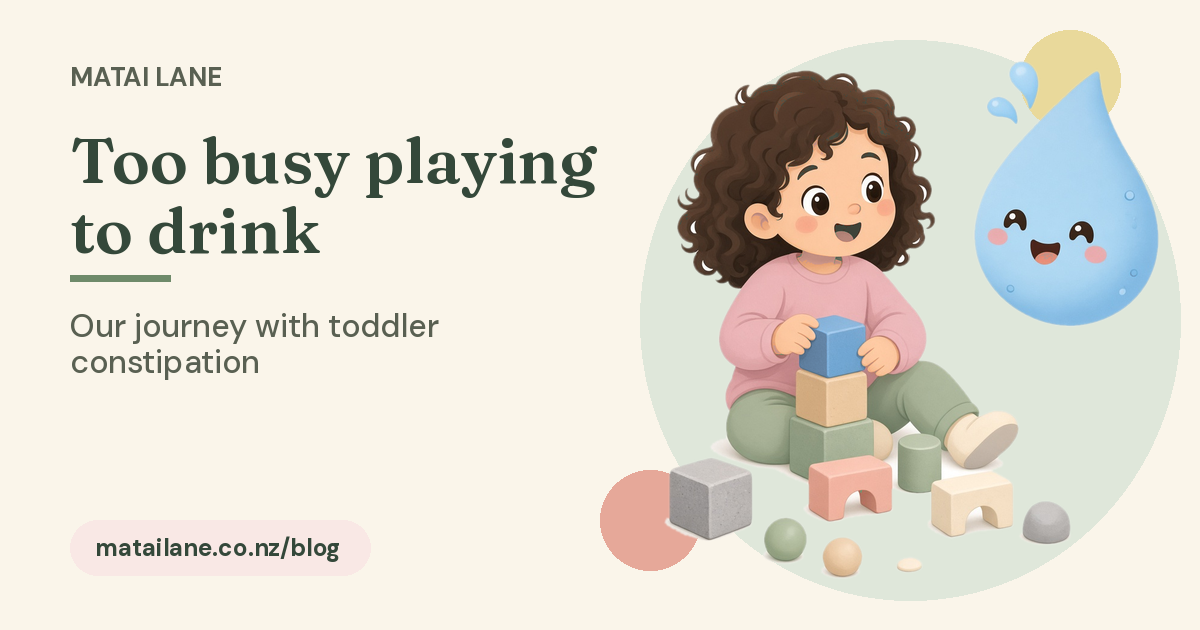
When our daughter started kindy and daycare, she loved it. There was always something to build, dig or explore, and she was having far too much fun to stop for a drink.
We'd pack her bottle every morning, and most days it came home almost full. At the time we didn't think much of it. She seemed happy and busy, and that felt like the main thing.
When things got hard
Over time, she developed really bad constipation. It was tough on her, and on us.
We went to our GP first and were given stool softeners. They didn't fix it for us. We were stumped, because our girl already loved her fruit and veggies, so we didn't think fibre was the problem.
When poo time got scary
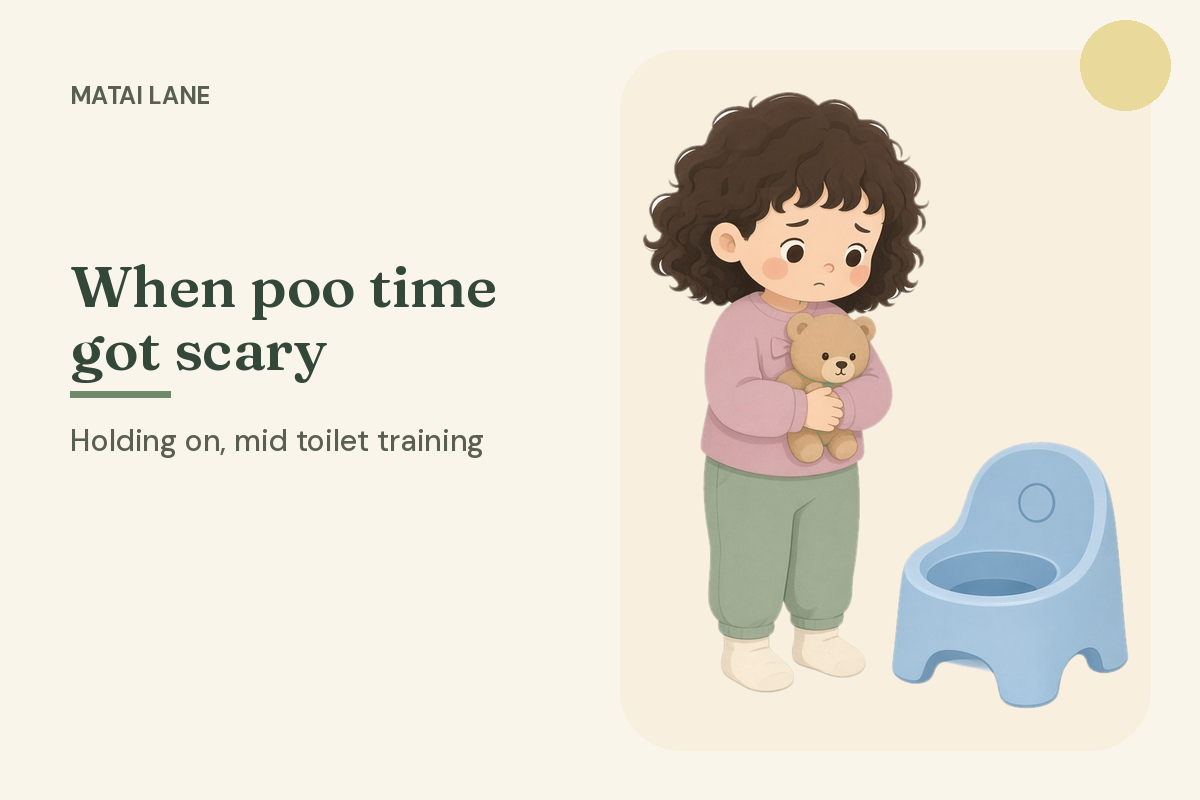
Then something else started to happen. Our daughter began to get scared when it was poo time. She would hold on and wouldn't let go.
This was right in the middle of toilet training, so it really felt like we were going backwards. If you've been there, you'll know how worrying and exhausting that feels.
We later learned this is a known pattern. KidsHealth NZ describes "the painful constipation cycle": when a child holds on to avoid pain, the poo gets harder and larger, which makes it even more painful to pass.
Finding the real issue with a continence nurse
In the end we saw a continence nurse who specialises in toilet training, and this is where things finally turned around.
After a bowel clear-out, we found out the main issue: our girl just wasn't getting enough fluids. Together with the clear-out, our job was to make sure she drank her recommended fluid intake every day. It sounds simple, but for a busy little one who would rather be playing, it took a real plan.
How much do kids actually need?
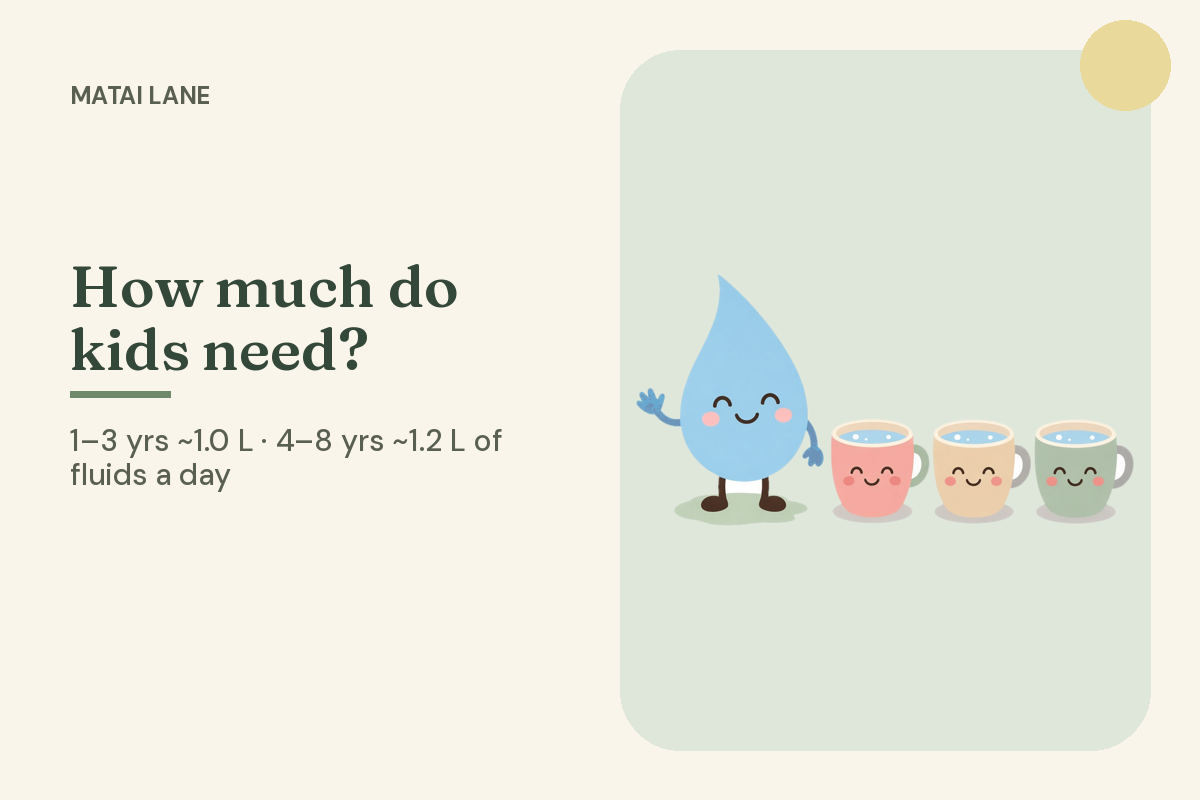
This was the bit that surprised us most. The Nutrient Reference Values for Australia and New Zealand set an "adequate intake" for fluids each day. That includes plain water, milk and other drinks:
1–3 years: about 1.0 litre a day (about 4 cups)
4–8 years: about 1.2 litres a day (about 5 cups)
9–13 years: about 1.4 litres a day for girls (about 5–6 cups) and 1.6 litres for boys (about 6 cups)
The same guidelines note that kids in very hot weather, or who are very active, may need more. When we compared those numbers with her almost-full bottle at pick-up, it all made sense.
What helped our girl
Every child is different, but these are the things that made a difference in our house:
A bottle she loved and picked herself. Because she chose it, she wanted to carry it and use it.
Little sips at meals and pick-ups. Rather than one big drink, we built small sips into the moments that already happen every day.
Checking her bottle at the end of the day. A quick look at pick-up told us how she'd gone, so we could top her up at home if needed.
KidsHealth NZ also suggests making sure your child is drinking water regularly, eating plenty of fruit and veges, being active, and sitting on the toilet regularly, for example in the morning.
Tips to help little ones drink more
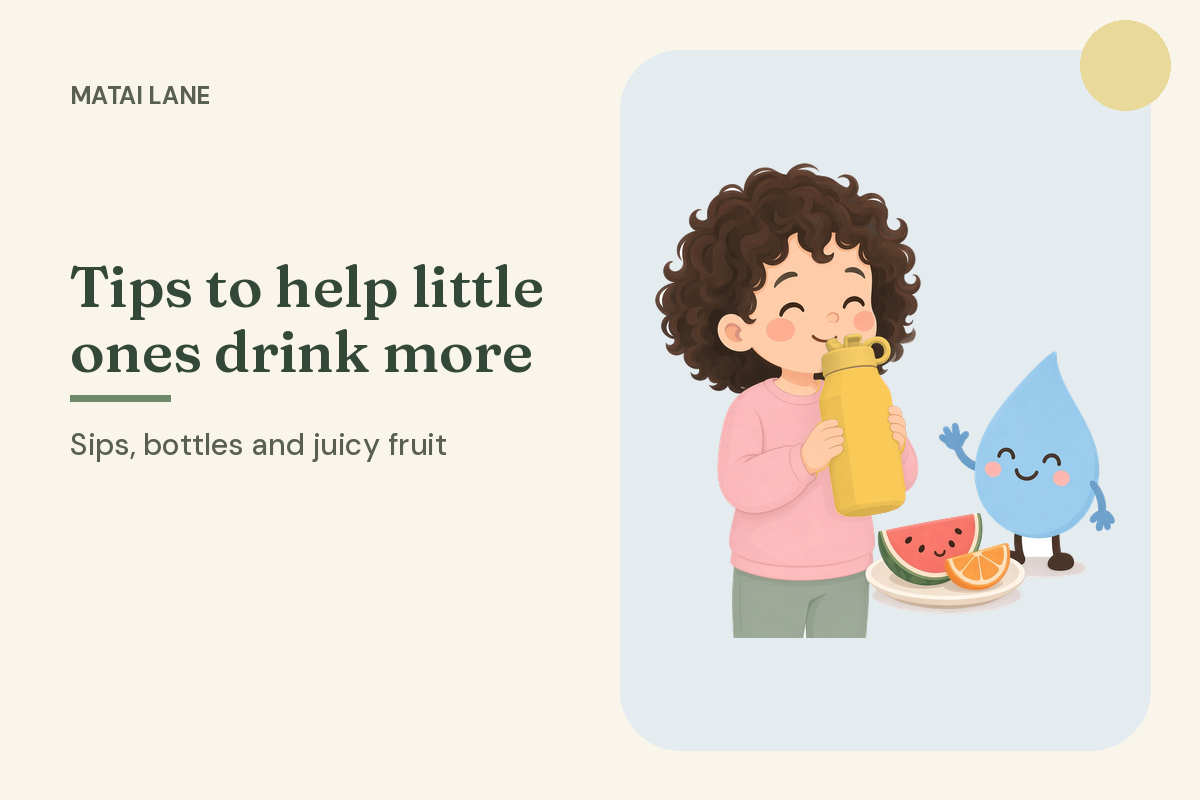
KidsHealth NZ points out that tamariki can forget to drink when they're busy, so it helps to offer drinks often and always have a drink bottle or cup handy. Here are some ideas that are easy to fit into a busy day:
Let them choose their own bottle or cup. A favourite colour or a fun straw can make drinking feel like their thing, not ours.
Tie sips to routine moments. A drink when they wake up, at each meal and snack, at pick-up, after the bath. Plunket suggests offering regular drinks through the day, not just at mealtimes.
Put water on the table. A jug of water at meals makes it the easy, everyday choice.
Add a little interest. KidsHealth NZ suggests a slice of orange, lemon, watermelon or strawberry, or some fresh mint, in their water.
Offer juicy fruit. On warm days Plunket suggests fruit pieces like oranges or watermelon, or ice blocks.
Drink together. Little ones love copying, so have your own glass and make it a "cheers!" moment.
Check and refill at pick-up. A quick look at the bottle tells you how the day went, and you can top them up at home.
Offer more on hot or active days. KidsHealth NZ notes tamariki need extra fluids when they're active or when the weather is hot.
Helping our girl feel comfortable pooing again
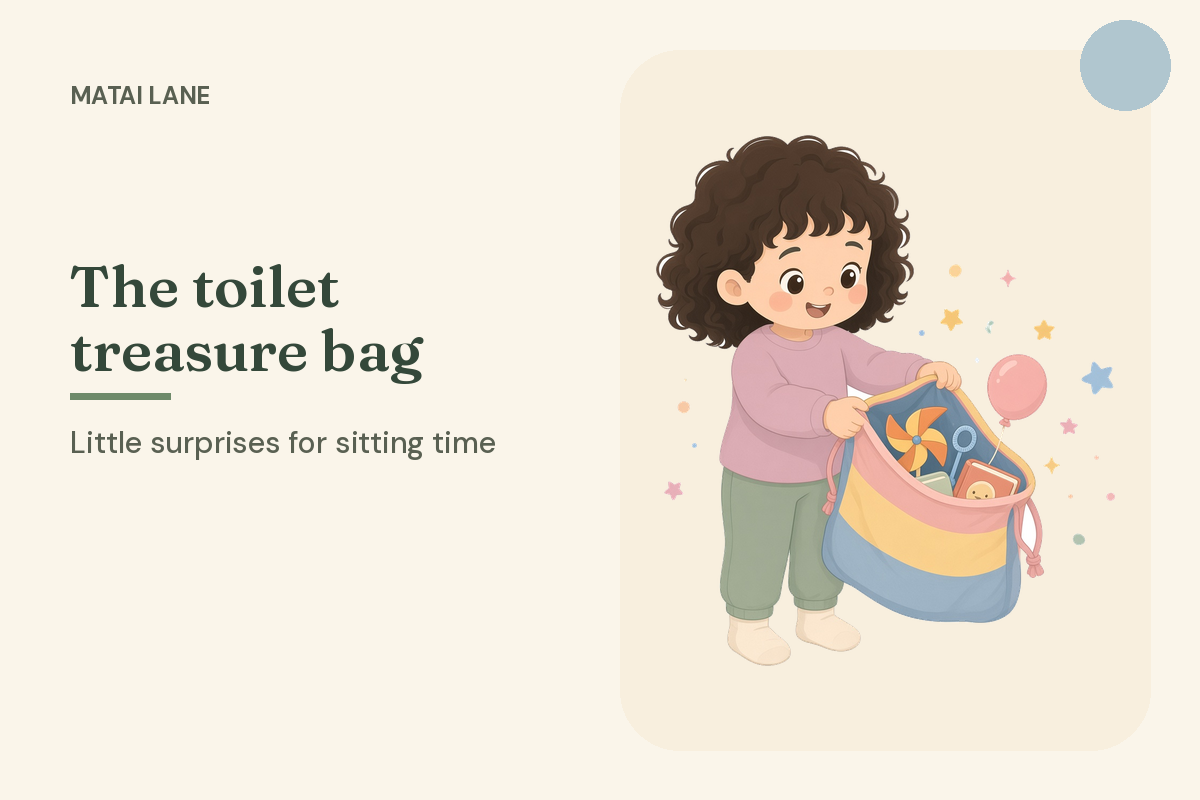
Getting more fluids in was only half of it. Our daughter also had to learn that poo time wasn't scary any more. These are the ideas our continence nurse shared with us. They're what worked for our family, not medical advice, so please check with your own health professional about what's right for your child.
The toilet treasure bag
This was a game changer for us. It's a special bag of treasures that only comes out when your child is sitting on the toilet.
Fill it with small toys and rewards your child loves. Start with just a few and add more as they get on board.
Blowing toys like bubbles, whistles, windmills and balloons are great. Our nurse explained that the muscles we use for blowing are the same ones we use for pooing.
Swap the toys around every few days so it always feels like treasure. Surprises keep them keen.
Praise the behaviour, not the poo. We'd say things like "Well done for doing your exercises and taking your time on the toilet."
Toilet gym: the 7 P's
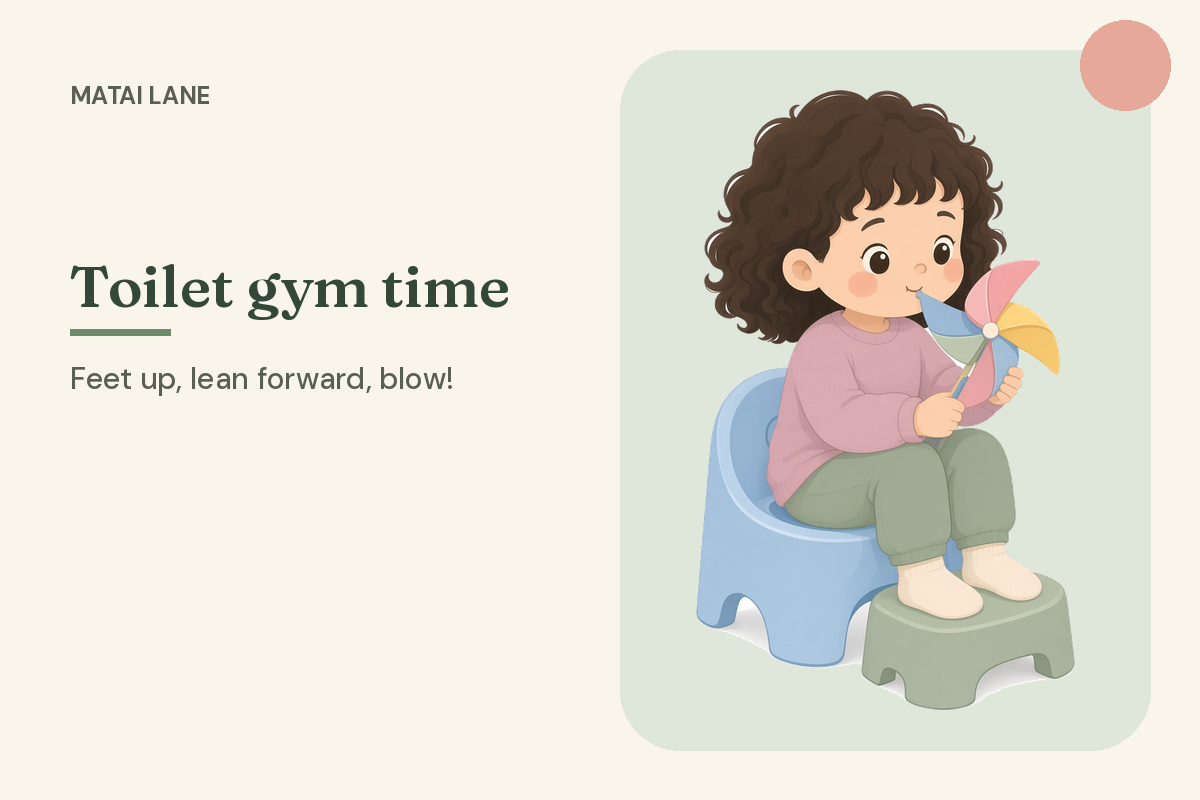
Our nurse called it "toilet gym", and it had seven P's:
Play. Keep a little activity kit in the bathroom, like bubbles, windmills, balloons or a joke book, to help them sit and relax.
Plan. Use a footstool so their feet are flat and their knees are above their hips, leaning forward with elbows on knees. Let them help choose the stool and toys, because the more involved they are, the more likely they'll cooperate.
Practice. Start with about 2 minutes of sitting and build up to 5. The best time is about 20 minutes after a meal or after running around.
Patience. Toilet time may have upsetting memories for them, so stay calm and supportive.
Perseverance. It can take months to build a good routine. Be their toilet coach for as long as they need you.
Positive. Pooing is healthy and normal. Keep your words, tone and body language calm and neutral, even when there's a mess.
Praise. Praise them for sitting and trying, whether or not a poo comes.
Wake up Mr Poo!
While sitting, our nurse showed us four little exercises:
Sit and rub: a gentle tummy massage in a clockwise direction.
Sit and rock: rocking forward and back (throwing a ball into a box makes it a game).
Sit and blow: big huff-and-puff blowing, like the big bad wolf, or blowing up a balloon.
Sit and chill: belly breathing, singing, a silly joke or a book.
A book that helped us
Reading Winnie Weka and Mr Poo together really helped our girl. It was a story she could relate to, because it was exactly what she was going through at the time, and the tips for making poos easier were all right there in the book. It's a New Zealand picture book by Lisa Smith, a children's continence nurse, and it's written, illustrated and printed here in Aotearoa. It uses a gentle, fun story about Winnie and her friend Mr Poo to talk about toilet training and constipation. It's available from the Children's Continence Service NZ (see References).
Why SipSoft is in our range
Our experience with our daughter is a big part of why we wanted a kids' bottle in the Matai Lane range. SipSoft is a 12 oz (about 355 ml) bottle made from BPA-free, food-grade silicone, in colours kids actually want to carry. It's not a fix for anything. It's simply the kind of bottle we wish we'd had on hand when we started this journey, one a little one is happy to pick up.
We're launching in December 2026, and you can join our early access list on our website for 15% off.
When to get help
Looking back, we wish we'd known the signs sooner. KidsHealth NZ lists signs of constipation in tamariki, including:
small hard lumps of poo, or poo that is large and hard to pass
not pooing for 3 or more days
pain or crying when pooing
tummy pain that comes and goes
poo stains in underwear or poo accidents
KidsHealth NZ advises calling Healthline on 0800 611 116 or seeing a health professional if your child has tummy pain, the constipation is getting worse, your child finds toileting very upsetting, or your child is having poo accidents. If it doesn't get better, go back and see them again. Your GP can also talk to you about a referral to a continence nurse, and the NZ Continence Association has information for families.
Please note: this is our family's experience only, not medical advice. Every child is different. If you're worried about your little one, please talk to your GP, Plunket nurse or a continence nurse.
You're not alone
If you're in the thick of it right now, with tears at poo time and toilet training that feels like it's going backwards, please know you're not alone. It got better for us, and we hope sharing our story helps someone else.
We'd love to hear what's helped your family. Come and say kia ora on Instagram.
Ngā mihi,
The Matai Lane team
References
Eat For Health (NHMRC). Water – Nutrient Reference Values for Australia and New Zealand. https://www.eatforhealth.gov.au/nutrient-reference-values/nutrients/water
KidsHealth NZ. Constipation. https://www.kidshealth.org.nz/constipation
Healthify He Puna Waiora. Constipation in children. https://healthify.nz/health-a-z/c/constipation-in-children
NZ Continence Association. Continence information – children. https://www.continence.org.nz/information-children
KidsHealth NZ. Drink choices for children and young people. https://www.kidshealth.org.nz/healthy-eating/drink-choices-for-children-young-people
Whānau Āwhina Plunket. Heat and dehydration. https://www.plunket.org.nz/caring-for-your-child/safety-outdoors/heat-and-dehydration/
Children's Continence Service NZ. Winnie Weka & Mr Poo book (Lisa Smith). https://childrenscontinence.com/shop/p/winniewekaandmrpoobook