Little Sips, Big Habits: How to Encourage Kids to Drink More Water
Simple, everyday ways to help tamariki drink more water: their own bottle, fruit-slice flavours, water with meals, daily routines and extra drinks on hot, busy days.
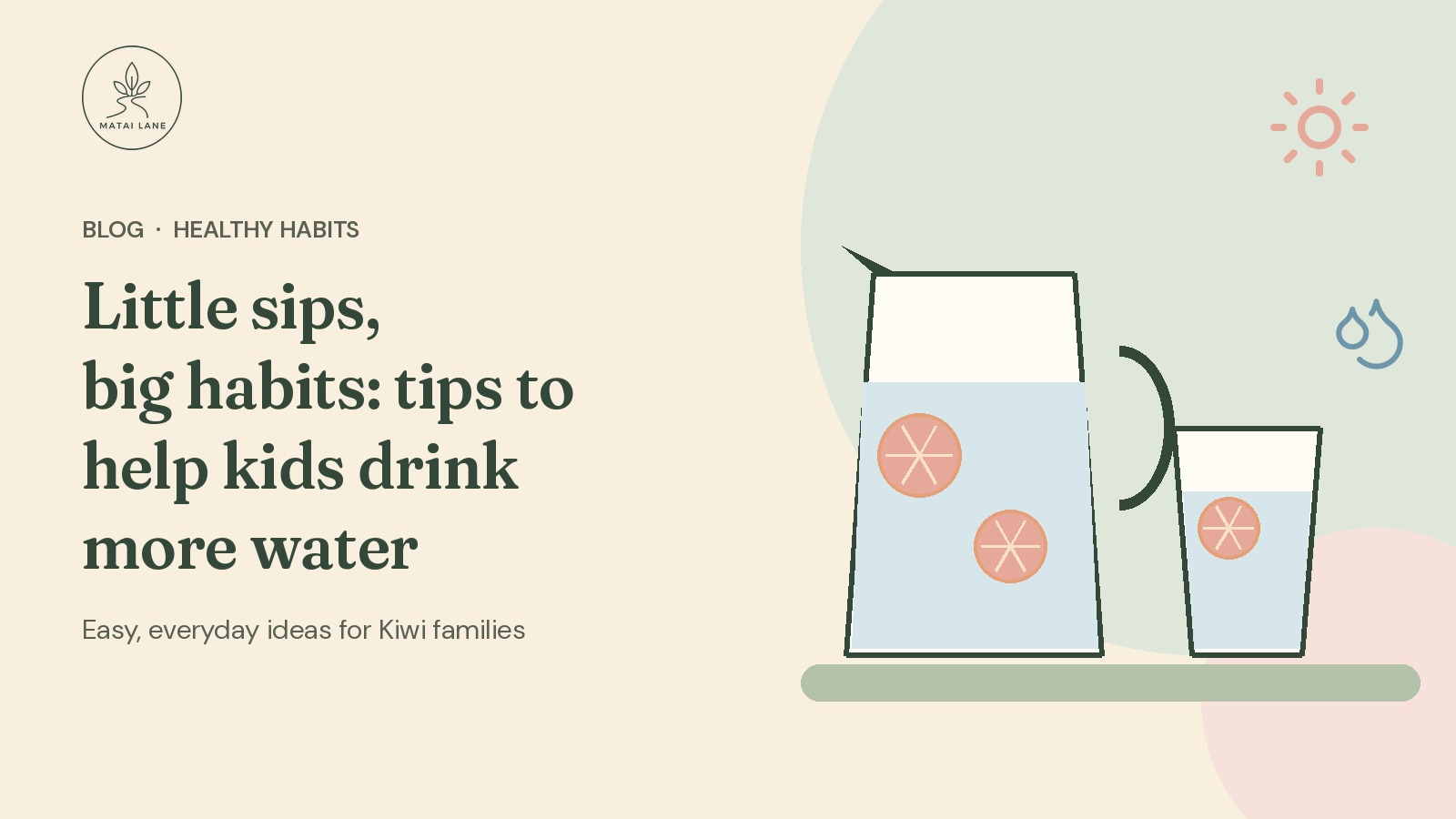
Getting little ones to drink enough water can feel like a daily negotiation, especially when there's juice in the fridge or something far more exciting happening in the sandpit. The good news is that a few small habits make a big difference. Our little helper is proof that a favourite bottle and a slice of orange can turn water into the drink of choice. Here are our favourite tips, backed by trusted New Zealand health sources.
Why water comes first
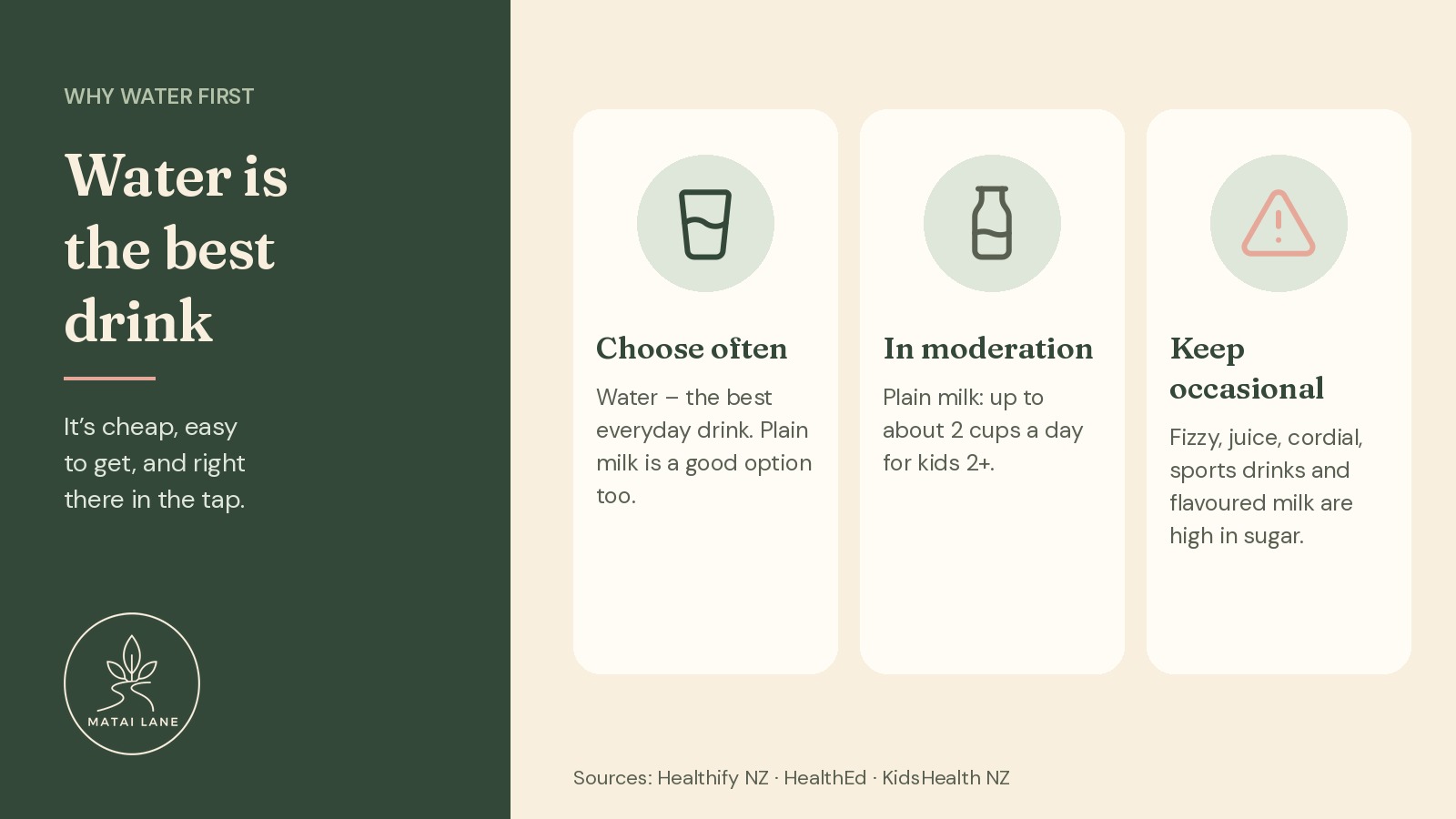
Water is the best drink for kids, and it's cheap and easy to get (Healthify). Children need plenty of water and lots of small drinks through the day to keep their bodies working, and they need more when they're active or when it's hot (HealthEd). Plain milk is also a good option, in moderation: for children 2 and over, Healthify suggests limiting milk to about 2 cups (500 ml) a day (Healthify).
Sugary drinks like fizzy, juice, cordial, sports drinks and flavoured milk are high in sugar and are best kept as occasional drinks (Healthify). Water is such a priority that the Ministry of Health's guidance for schools recommends water and plain milk as the drinks schools provide (Ministry of Health, Ministry of Education).
Lead by example
Kids copy what they see. If you keep your own bottle handy, reach for water when you're thirsty and choose it at meals, it quickly becomes "just what our family drinks". Say it out loud too: "I'm thirsty, I'm getting some water. Want some?"
Make water easy to reach
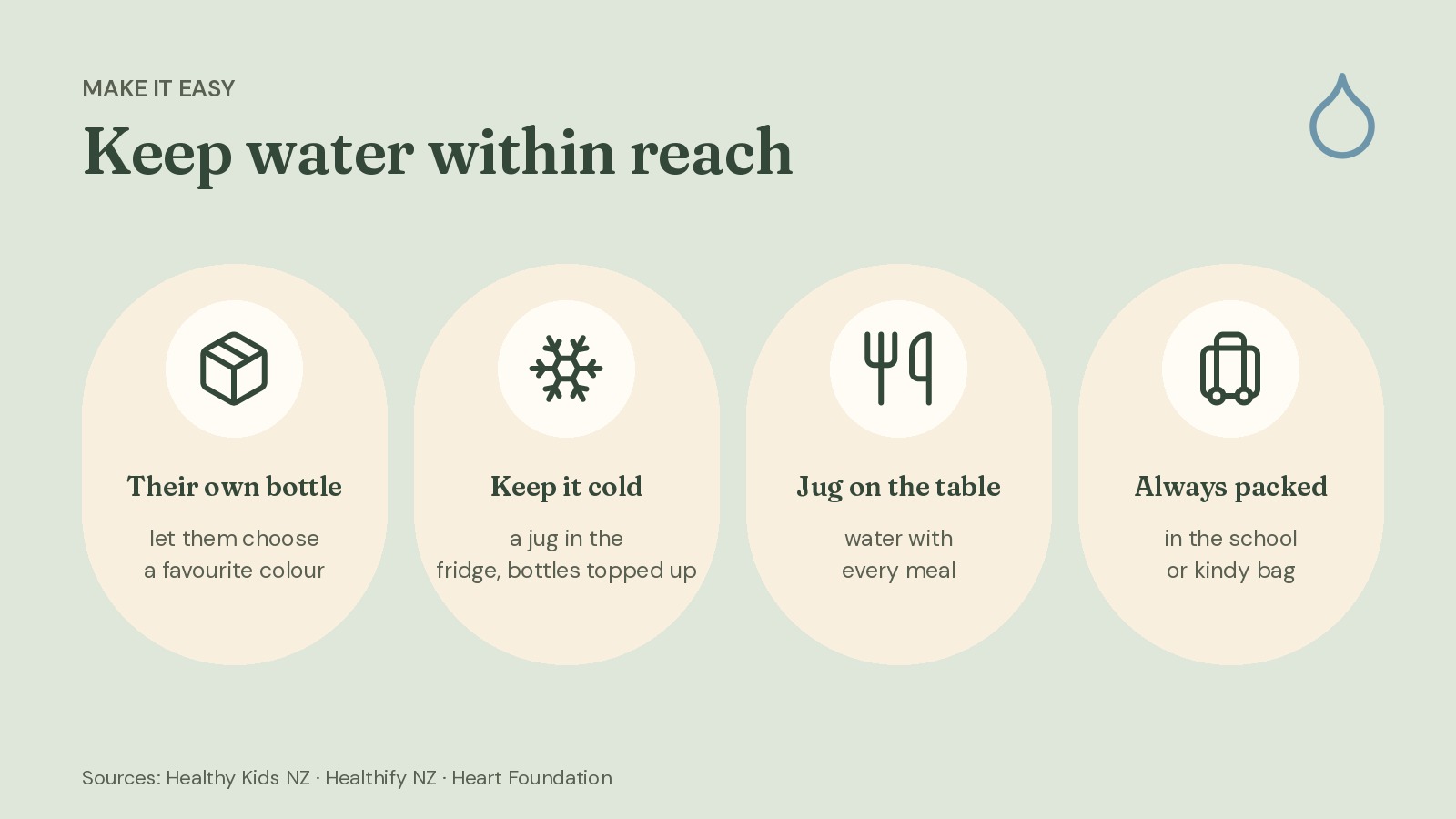
Let them choose their own bottle or cup. Having a bottle they love makes water the fun choice (Healthy Kids).
Keep it cold. Keep a jug of cold water in the fridge and bottles topped up with cold water (Healthify). Freezing a water bottle the night before keeps it cool through a hot day at school (Heart Foundation).
Put a jug on the table at mealtimes, so water is the drink that goes with food (Healthy Kids).
Always have one packed. Pop a full bottle in the school bag or kindy bag so there's a drink on hand (Healthy Kids).
Make it fun
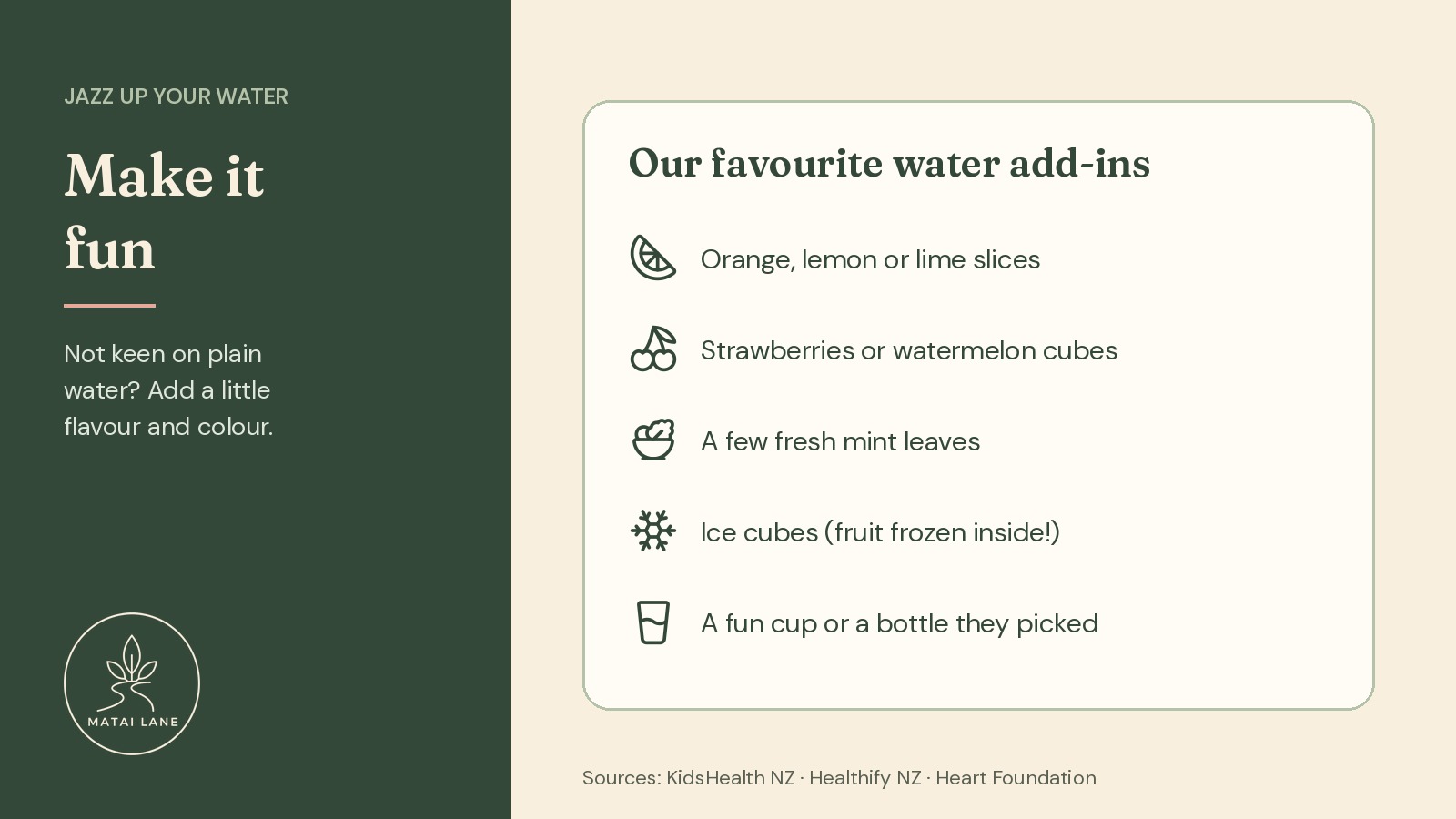
If your child isn't keen on plain water, add a little flavour and interest (KidsHealth):
Fruit slices: orange, lemon, watermelon or strawberry (KidsHealth).
Fresh herbs: a few mint leaves (KidsHealth), or try fruit, vege and herb combinations (Heart Foundation).
Fun ice cubes: freeze small pieces of fruit in ice cube trays.
Let them help: kids are more likely to drink something they "made" themselves, so let them pick the fruit and fill the jug.
Make it a game: a sticker each time the bottle is finished, or a "cheers!" at dinner.
Build a water routine
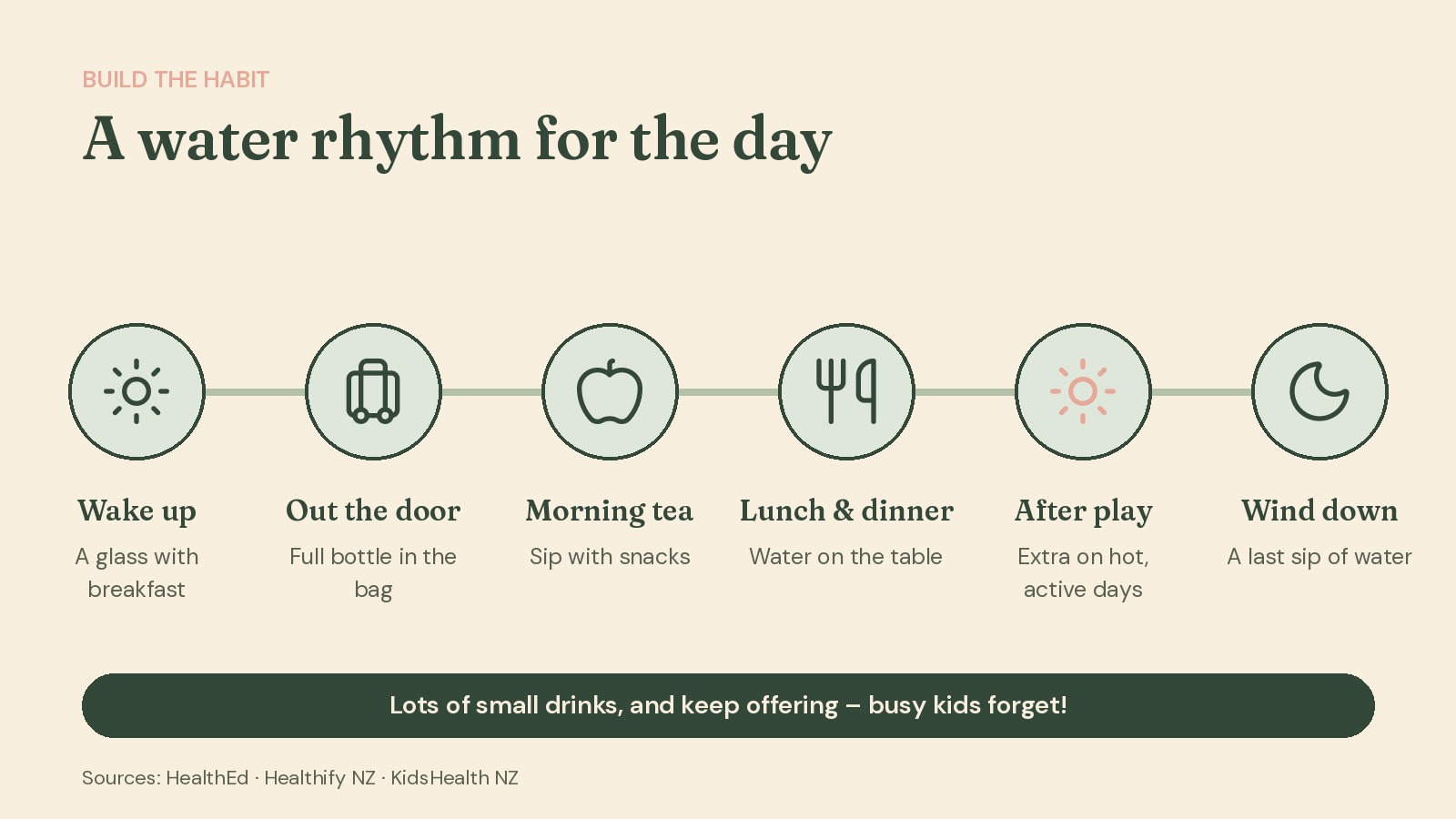
Children may forget to drink when they're busy, so keep offering (Healthify). Linking water to things that already happen each day helps it stick:
A glass of water with breakfast.
A full bottle in the bag before you head out the door.
A drink with morning tea, lunch and afternoon snacks.
Water on the table at dinner.
A drink after sport, swimming or a run around the park.
Small, regular reminders through the day work well, and lots of small drinks is exactly what's recommended (HealthEd).
Go easy on sugary drinks
Sugary drinks contribute over a quarter of the total dietary sugar children in Aotearoa consume (Healthify). It's easier to say yes to water when there are fewer other options:
Keep fizzy, juice and cordial out of the house where you can, and save them for occasional treats (Healthify).
If you do give juice, dilute it well with water and offer it with a meal (KidsHealth).
Don't give children tea, coffee or energy drinks (KidsHealth).
On the sports field, water is the best choice for active kids (Healthify).
More on hot and busy days
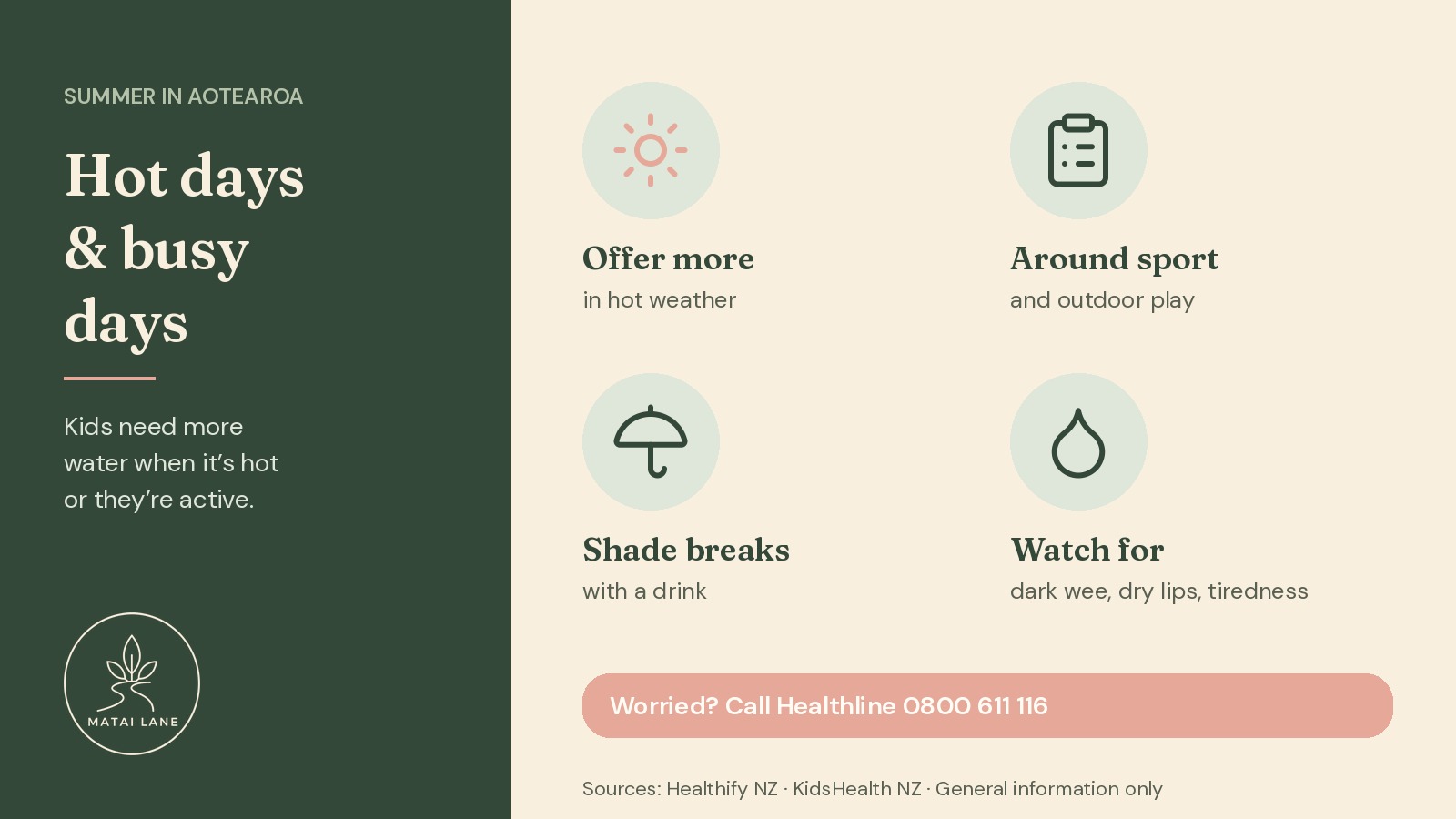
Summer in New Zealand means beach days, backyard sprinklers and long afternoons outside, and kids need extra fluids when they're active or the weather is hot (KidsHealth). Offer drinks often, take shade breaks, and refill bottles whenever you can.
Little ones can become dehydrated quickly because their bodies are smaller (KidsHealth). Early signs can be easy to miss, and may include weeing less than usual, dark yellow wee, dry lips or seeming tired (KidsHealth). If you're ever worried about your child, trust your instincts and get advice.
A bottle they'll want to carry
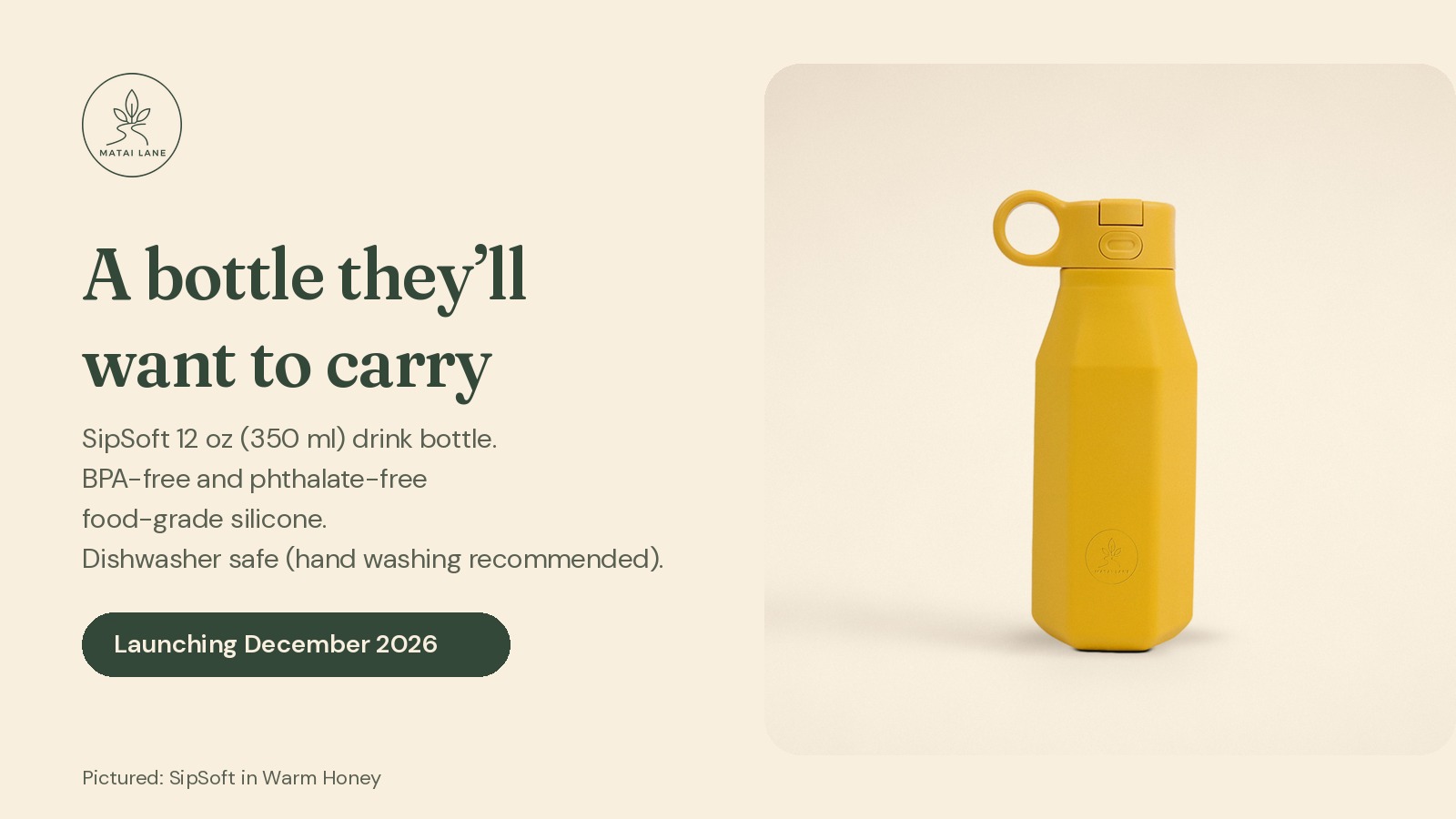
We designed our SipSoft bottle for little hands and everyday adventures, from kindy drop-off to the beach.
SipSoft 12 oz (350 ml) drink bottle ($29.95 in our Flagship Hues, $31.50 in our Pastel Soft and Earthy Soft collections): made from BPA-free and phthalate-free food-grade silicone, with a carry loop and plenty of colours for kids to choose their favourite. Dishwasher safe, though we recommend hand washing.
We're launching in December 2026, so keep an eye on matailane.co.nz for updates.
Little sips, big habits
There's no need to get it perfect every day. Keep water close, make it appealing, and keep offering. Before long, reaching for the water bottle will be second nature. Cheers to that! 💧
General information only. For advice about your own child, talk to your GP or Plunket nurse, or call Healthline on 0800 611 116.
Ngā mihi, The Matai Lane team
References
Healthify NZ. Drinks for kids.
HealthEd / Health New Zealand. Eating for Healthy Children aged 2 to 12 (HE1302).
KidsHealth NZ. Drink choices for children and young people.
KidsHealth NZ. Dehydration in babies and children.
Healthy Kids NZ. Water and milk are the best drinks for your family.
Heart Foundation NZ. Healthy habits for healthy kids.
Heart Foundation NZ. Jazz up your water this summer.
Ministry of Health. Healthy Food and Drink Guidance – Schools.
Ministry of Education. Consultation on introducing a healthy drinks only policy in primary schools (April 2022).