Clean, Dry, Ready to Go: How to Care for Silicone and Stainless Steel Feeding Gear
A practical, NZ-sourced guide to washing, sterilising, drying and storing silicone and stainless steel baby feeding gear, using our MealNest bib, bowl and sippy cup as the worked example.
Porridge at breakfast, yoghurt at morning tea, bolognese at dinner: little ones' feeding gear works hard. The good news is that silicone and stainless steel are easy to look after with a few simple habits. In this guide we use our MealNest set as the worked example: the silicone bib, the 3-in-1 stainless steel bowl with its silicone sleeve, and the sippy cup with its spout and straw lids. The tips come from trusted NZ and international sources, but every product is a little different, so always check the care instructions for the items you own first.
Get to know your pieces
The bib is food-grade, BPA-free silicone, and it wipes clean or rinses in seconds between meals (MealNest Bib page).
The bowl is 304 (18/8) stainless steel that sits inside a removable silicone sleeve with a suction base (MealNest Bowl page).
The sippy cup comes with 2 lids, a spout lid and a straw lid (MealNest Set page). Its inner cup is stainless steel, with a soft silicone sleeve.
Our MealNest product pages say to wash everything before first use, and that the pieces can go in the dishwasher. For the bowl, we recommend hand washing to avoid scratches and help it last longer (MealNest Set page, MealNest Bowl page).
Everyday washing
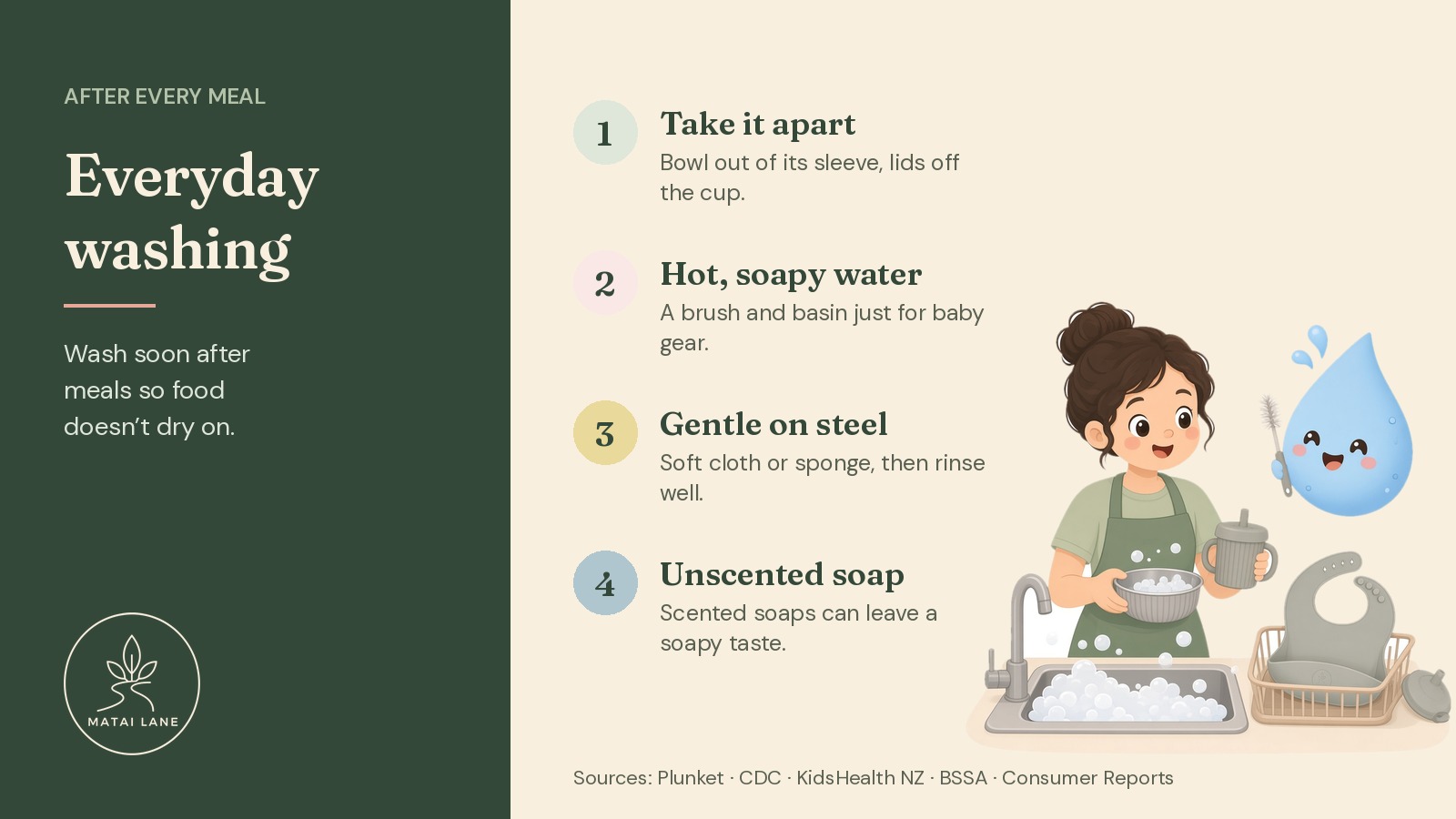
Wash soon after each meal so food doesn't dry on. Plunket suggests cleaning bottle-feeding gear straight after a feed (Plunket), and the habit works well for bowls and cups too.
Take it all apart. Slip the bowl out of its sleeve and take the lids off the cup. The CDC recommends separating every part before washing (CDC).
Use hot, soapy water and a brush that's only for feeding gear. The CDC also suggests washing in a clean basin rather than straight in the sink (CDC).
Go gentle on steel. Soap or mild detergent in warm water, with a soft cloth, sponge or soft brush, then a rinse in clean water, is usually all stainless steel needs (BSSA).
Rinse well. KidsHealth recommends rinsing well in hot water, then leaving everything to air dry (KidsHealth).
Pick an unscented dish soap. Scented soaps can leave a soapy taste on silicone (Consumer Reports).
Straws, spouts, valves and lids
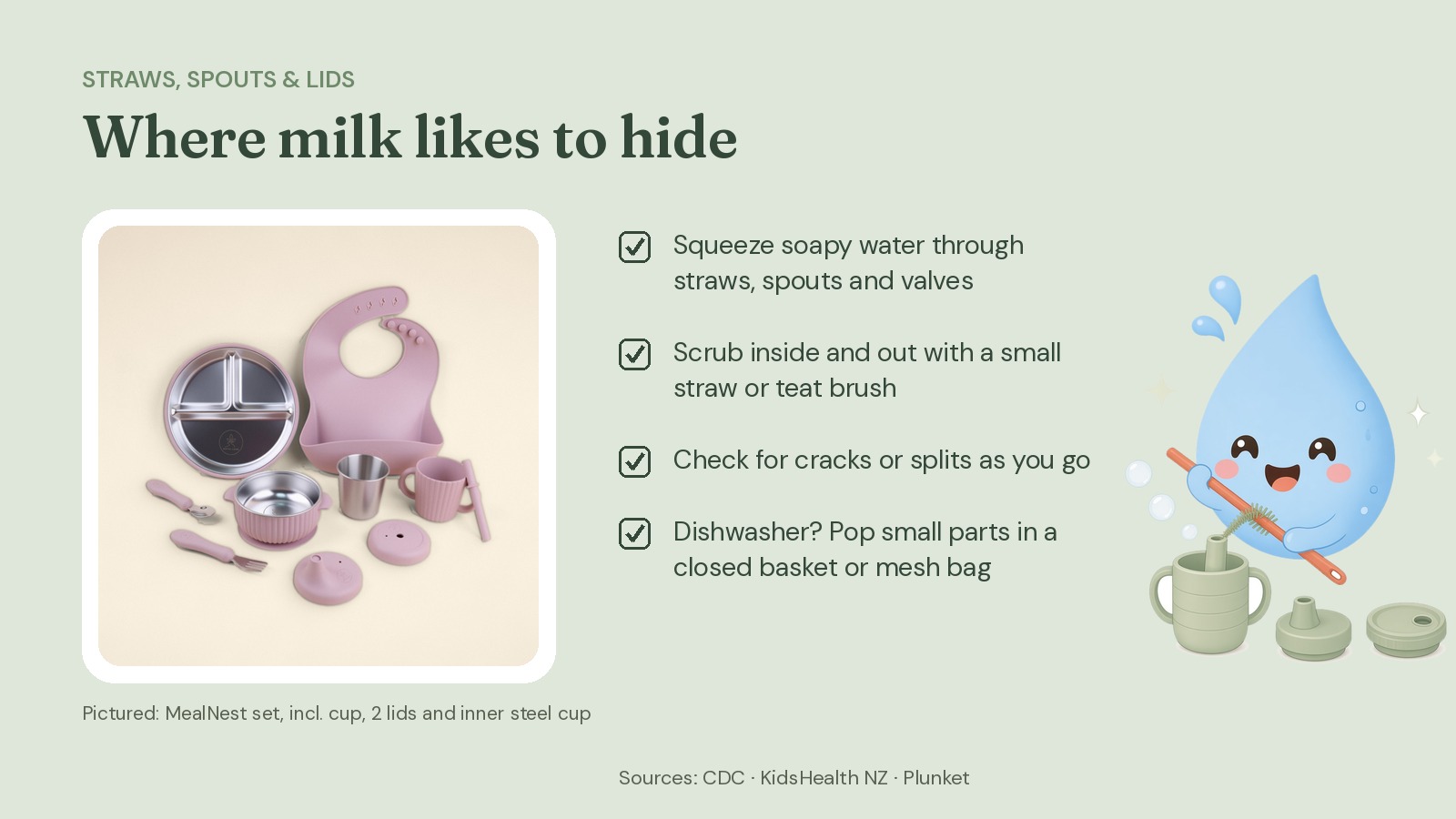
Narrow parts are where milk and food hide. Pour or squeeze soapy water through straws, valves and sippy cup spouts (CDC), then use a small straw or teat brush to scrub inside and out, as KidsHealth suggests for teats (KidsHealth). Check for cracks while you're there. Plunket advises throwing away damaged teats, because bacteria can grow inside the cracks (Plunket), and the same goes for a split spout or straw.
Using the dishwasher
Put small pieces, like straws and lids, in a closed-top basket or mesh bag so they don't end up in the filter (CDC).
If you can, use hot water and a heated drying cycle (CDC).
Remember that a dishwasher cleans feeding equipment but doesn't sterilise it (NHS).
Keep the rinse aid topped up, especially if you use powder. Rinse aid helps water slide off, so it doesn't leave mineral spots as it dries (Consumer NZ).
Sterilising and boiling for babies
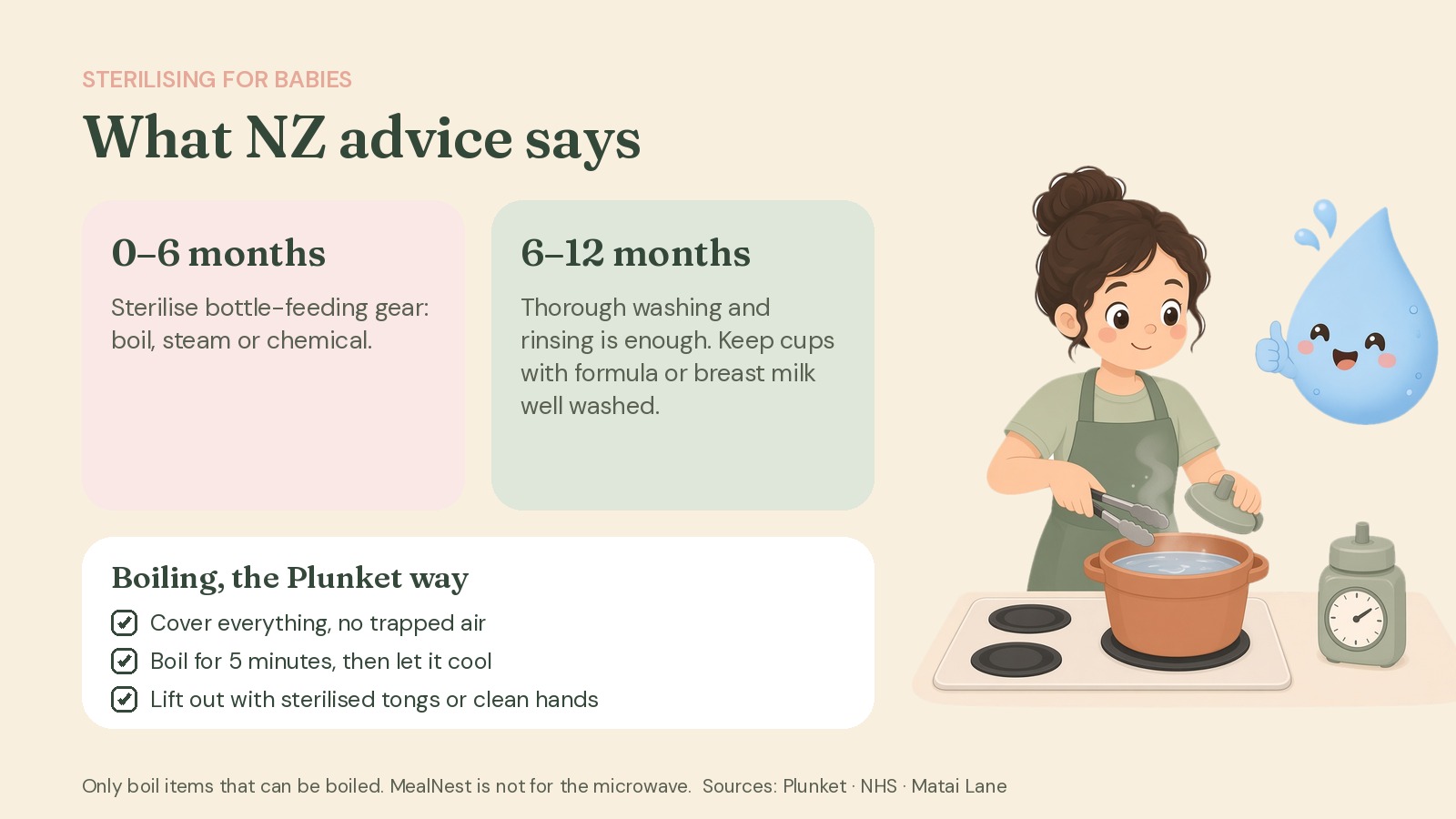
Here in Aotearoa, Plunket advises sterilising bottle-feeding equipment by boiling, steaming or with chemicals for the first six months. From six months, thorough washing and rinsing is enough (Plunket). Plunket also says to keep thoroughly washing feeding cups that hold infant formula or breast milk until your baby is 12 months old (Plunket). Our MealNest set is designed for babies from 6 months (MealNest Set page).
If you do sterilise:
Boiling: cover everything with water, with no air trapped inside, bring it to the boil and boil for five minutes. Let it cool, then lift items out with sterilised tongs or clean hands (Plunket).
Check first: only boil items that can be boiled (NHS), and check with the manufacturer which method to use (CDC). Our MealNest pages don't cover boiling or sterilising, so if you're unsure, flick us a message before you boil.
Skip the microwave. The MealNest set isn't suitable for the microwave, and the stainless steel pieces shouldn't be microwaved (MealNest Set page). That rules out microwave steam sterilisers for it.
Take care with chlorine on steel. Bleach-based products can make stainless steel corrode if they're left on too long or not rinsed off properly (worldstainless).
Smells, soapy tastes and white film on silicone
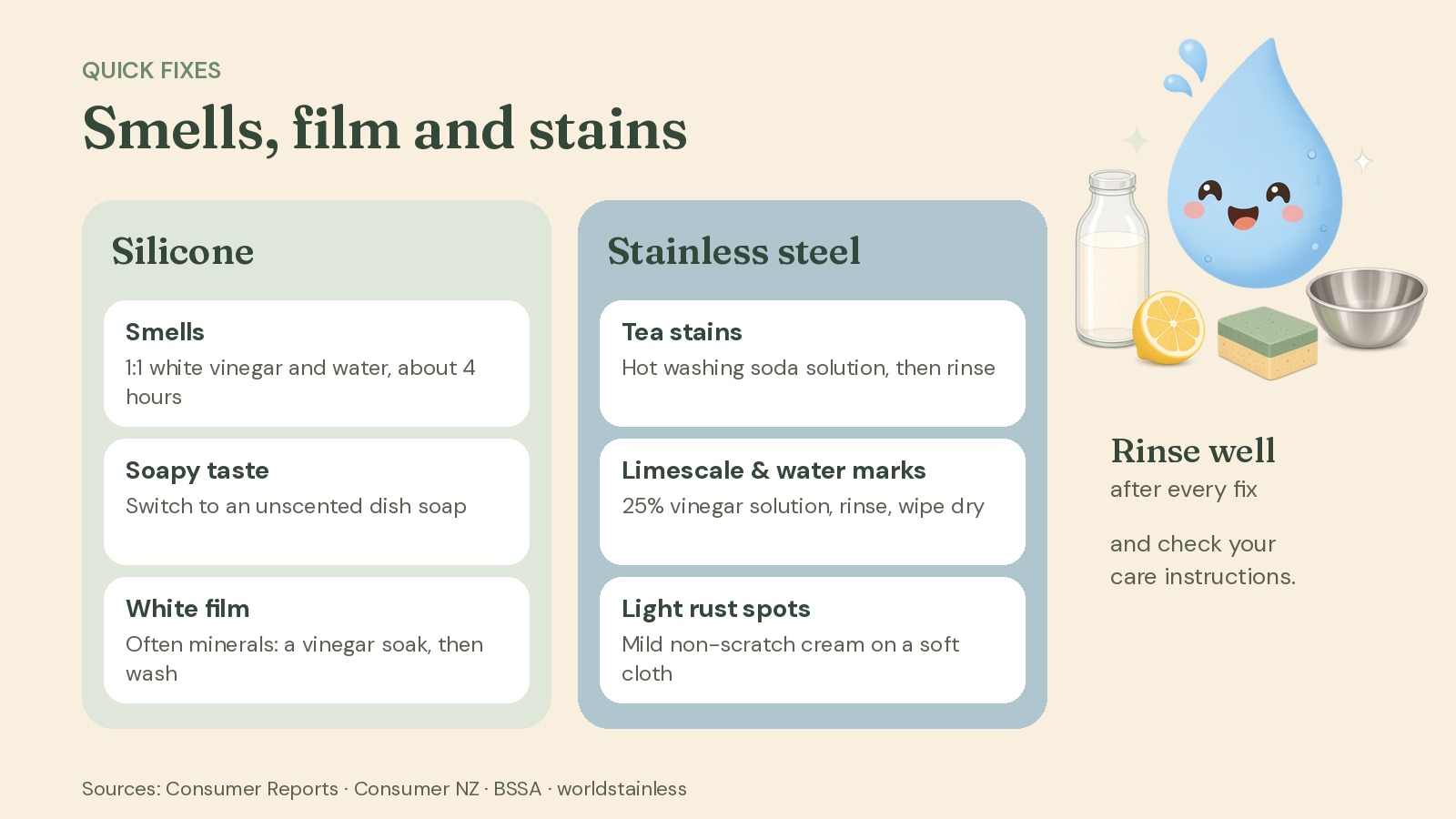
Smells or odd tastes: these often come from oil residue building up on the silicone (Consumer Reports). Soak in equal parts white vinegar and water for about four hours, or rub with fresh lemon, leave for 15 minutes, then wash in hot soapy water (Consumer Reports).
Soapy taste: switch to an unscented dish soap (Consumer Reports).
Chalky white spots or film: these are often minerals left behind when water droplets dry (Consumer NZ). Vinegar dissolves those minerals (Consumer NZ), so a vinegar soak followed by a normal wash and rinse usually shifts it. Consumer NZ doesn't recommend using vinegar in place of rinse aid in the dishwasher, though, as it can damage the seals (Consumer NZ).
Tea stains, water marks and rust spots on stainless steel
Tea or brown tannin stains: soak in a hot solution of washing soda (sodium carbonate), then rinse in clean water (BSSA, worldstainless).
Limescale and water marks: use a 25% vinegar solution, then clean, rinse and wipe dry (worldstainless). Wiping steel dry after washing helps prevent water marks, especially in hard-water areas (worldstainless).
Light rust spots: these are often caused by contamination from ordinary (carbon) steel (BSSA), so avoid leaving ordinary steel items against stainless steel, particularly when wet (ASSDA). A mild, non-scratching cream cleanser on a soft cloth, then a rinse and dry, usually lifts light rust staining (BSSA).
Don't leave food sitting. Stainless steel can discolour if salty or acidic food is left on it for a long time (ASSDA).
Wipe with the grain. On brushed steel, rubbing in the same direction as the grain protects the finish (ASSDA).
What to avoid
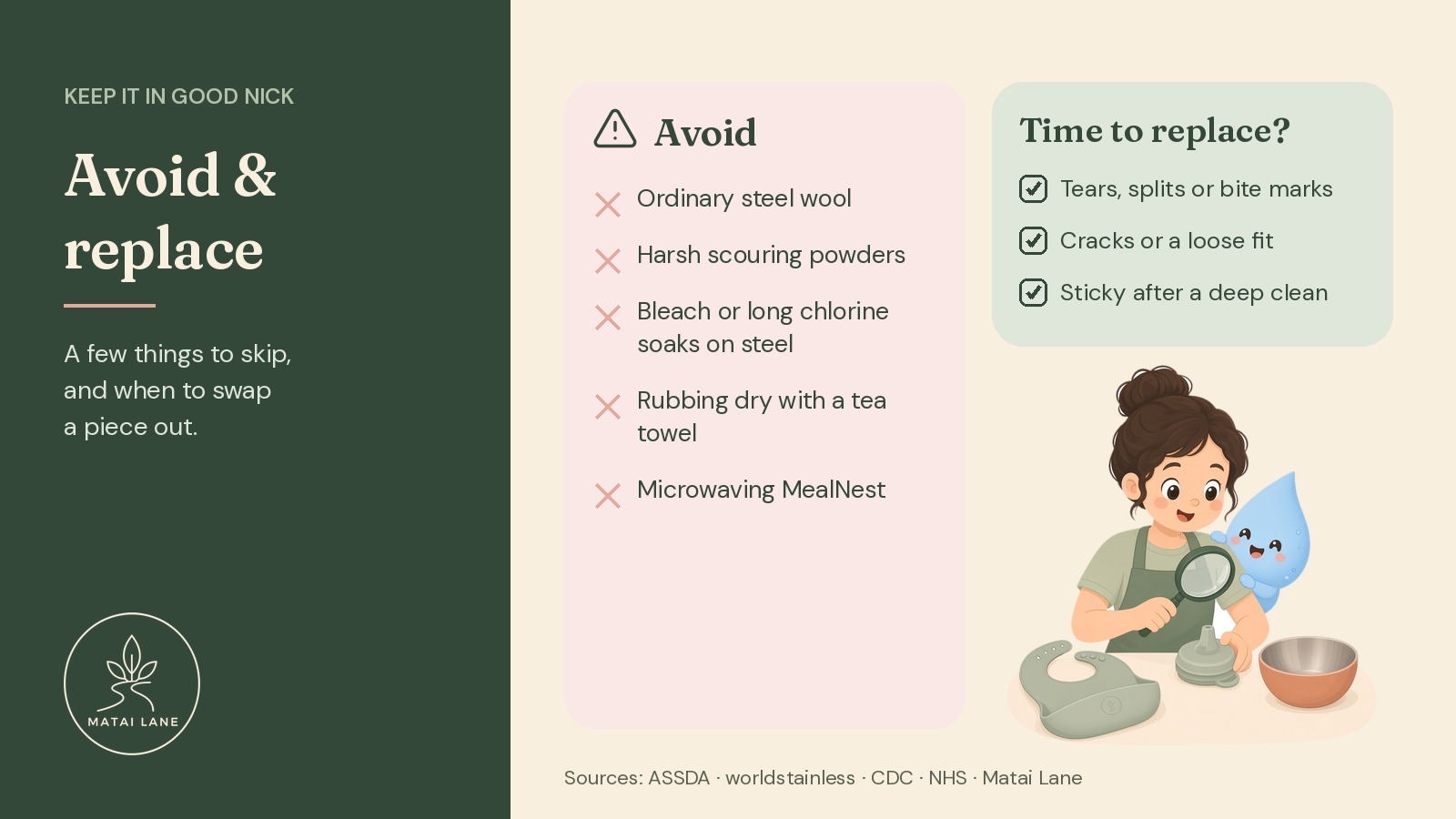
Ordinary steel wool, or scourers used on ordinary steel. Fragments left behind can rust onto stainless steel (ASSDA).
Harsh scouring powders. They leave scratch marks (worldstainless).
Bleach and chloride cleaners on steel, especially concentrated ones or long soaks (ASSDA, worldstainless).
Rubbing baby items dry with a tea towel. The CDC says this can transfer germs (CDC).
The microwave for any MealNest piece (MealNest Set page).
Drying and storing
Let everything air dry completely on a clean towel or paper towel, somewhere away from dust (CDC). If you'd like to dry the steel to avoid water marks, use a clean paper towel rather than a tea towel (CDC).
If you use a drying rack, keep it just for baby gear and wash it every few days, as racks can trap moisture (CDC).
Only put the bowl back in its sleeve, and the lids back on the cup, once every part is fully dry. Then store them in a clean, closed cupboard (CDC).
The bib rolls up for eating out (MealNest Bib page); give it a wash and dry once you're home.
When to replace
Our MealNest care instructions say to inspect every piece before each use and to throw it away at the first sign of damage or weakness (MealNest Set page). The NHS advises checking teats and bottles regularly for tears, cracks or damage, and notes that boiling wears teats faster (NHS). Look out for:
tears, splits or bite marks, especially on spouts and straws
cracks, or a sleeve or lid that no longer fits snugly
silicone that stays sticky or tacky even after a deep clean
If in doubt, swap it out.
Made for everyday family meals
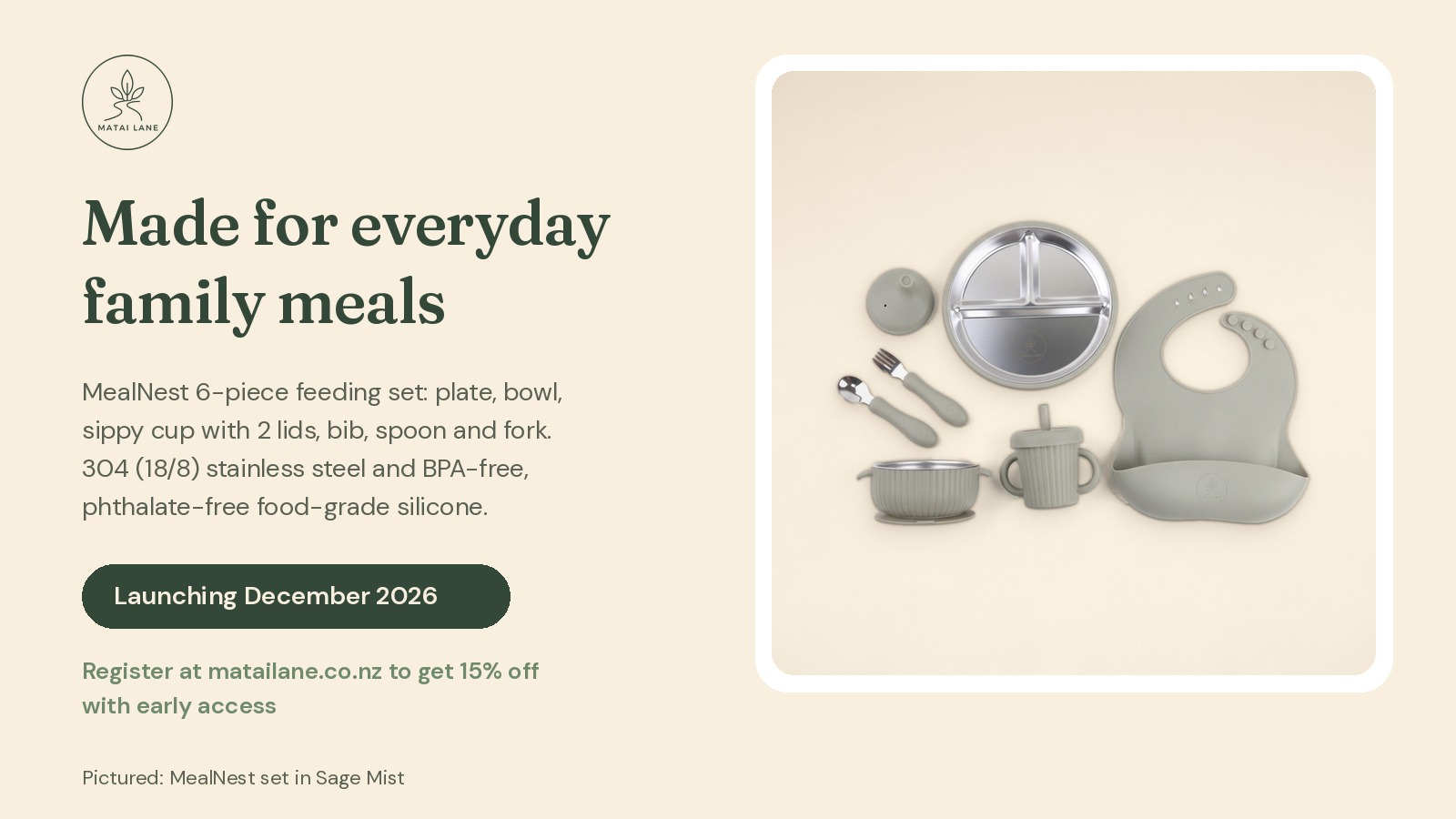
We designed MealNest for the messy, wonderful early years of learning to eat. The set includes a divided stainless steel plate, a bowl, a sippy cup with spout and straw lids, a bib, and a spoon and fork. It's made from 304 (18/8) stainless steel and BPA-free, phthalate-free food-grade silicone. FlexiEat, SnackBook, FlexiBento and SipSoft each have their own care details on their product pages.
Launching December 2026. Register at matailane.co.nz to get 15% off with early access.
General information only. For advice about your own baby, talk to your midwife, GP or Plunket nurse, call PlunketLine on 0800 933 922, or call Healthline on 0800 611 116.
Ngā mihi, The Matai Lane team
References
Plunket. Bottle-feeding (cleaning and sterilising bottle-feeding equipment).
KidsHealth NZ. How to wash & sterilise feeding equipment.
Consumer NZ. How to buy the best dishwasher detergent (rinse aid).
CDC (US). How to Clean, Sanitize, and Store Infant Feeding Items.
CDC (US). How to Clean Infant Feeding Items During Emergencies.
NHS (UK). Sterilising baby bottles.
British Stainless Steel Association (BSSA). Cleaning methods for stainless steel.
Australian Stainless Steel Development Association (ASSDA). Cleaning your indoor stainless steel.
worldstainless. Frequently Asked Questions: Cleaning Stainless Steel in the Home (PDF).
Consumer Reports (US). How to Clean Silicone Kitchen Utensils and More.
Matai Lane. MealNest Set: product details, safety and care.
Matai Lane. MealNest 3-in-1 Stainless Steel Bowl: product details.
Matai Lane. MealNest Silicone Baby Bib: product details.