How to Pack a Healthy Lunchbox for Kindy and School Kids in NZ
Simple, practical tips for packing a healthy kindy or school lunchbox, from the four food groups and weekly planning to keeping food cool and cutting food safely for under-5s.
Packing a lunchbox five days a week can feel like a never-ending puzzle. As parents ourselves (with one very opinionated little helper), we know the morning rush is real. The good news is that a healthy lunchbox doesn't need to be fancy. A bit of planning, a few go-to foods and some simple safety habits go a long way.
Here's how we approach it, using guidance from trusted New Zealand sources.
Start with the four food groups
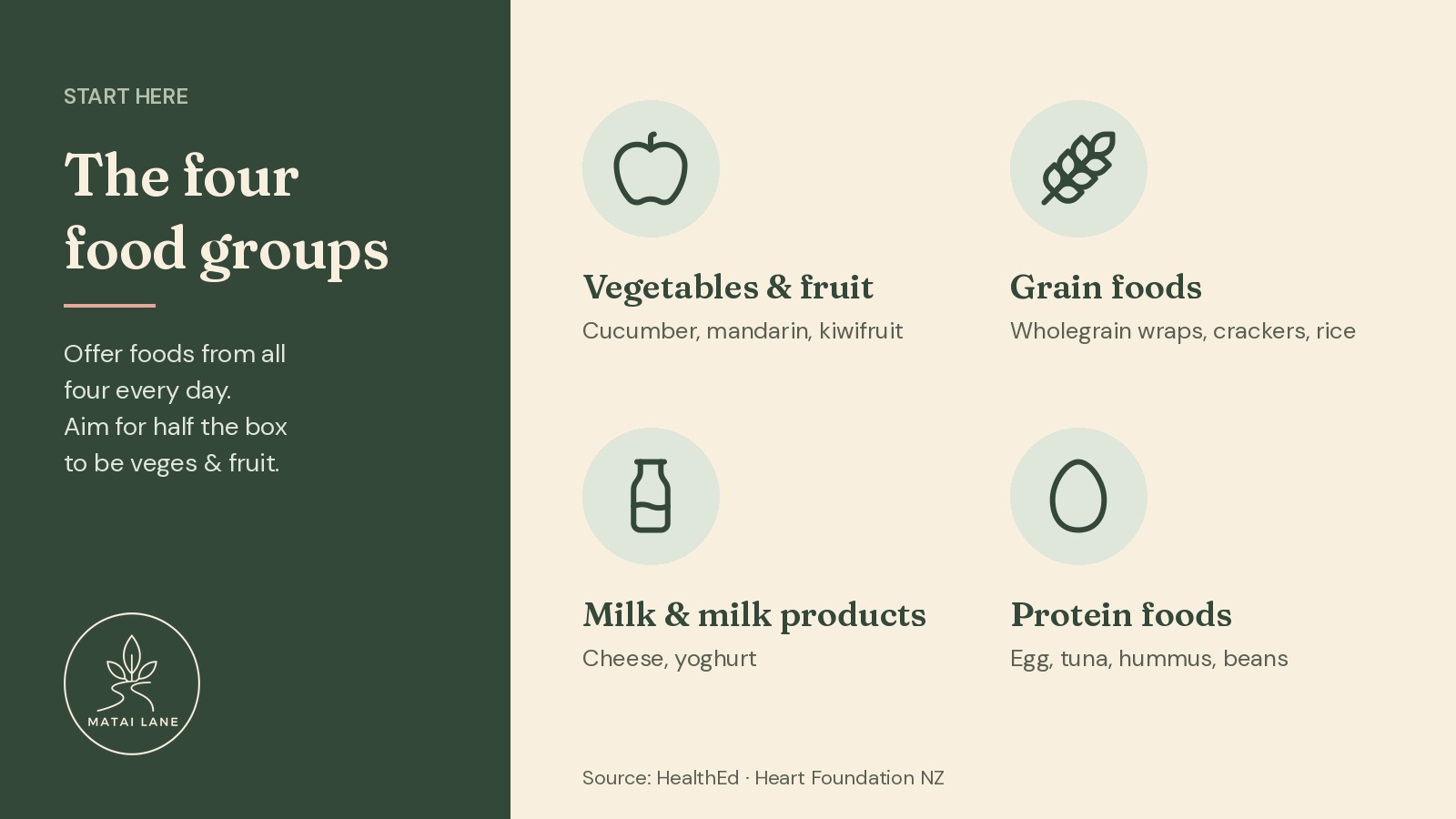
New Zealand health guidance recommends offering children foods from the four main food groups every day (HealthEd). A lunchbox is a great place to tick them off:
Vegetables and fruit: cucumber slices, capsicum strips, mandarin, kiwifruit, banana, leftover cooked kūmara or veges.
Grain foods: wholegrain sandwiches, wraps, pita, crackers, rice or pasta leftovers.
Milk and milk products: cheese, yoghurt or cottage cheese.
Protein foods: boiled egg, tuna, shredded chicken, hummus, baked beans or leftover lentil curry.
The Heart Foundation suggests aiming to fill half the lunchbox with colourful vegetables and fruit, and mixing up tastes, textures and shapes so lunch doesn't get boring. A compartment lunchbox makes this easy: one section each for fruit, veges, something grainy, something protein-y and a dairy option.
Plan the week (it's quicker than it sounds)
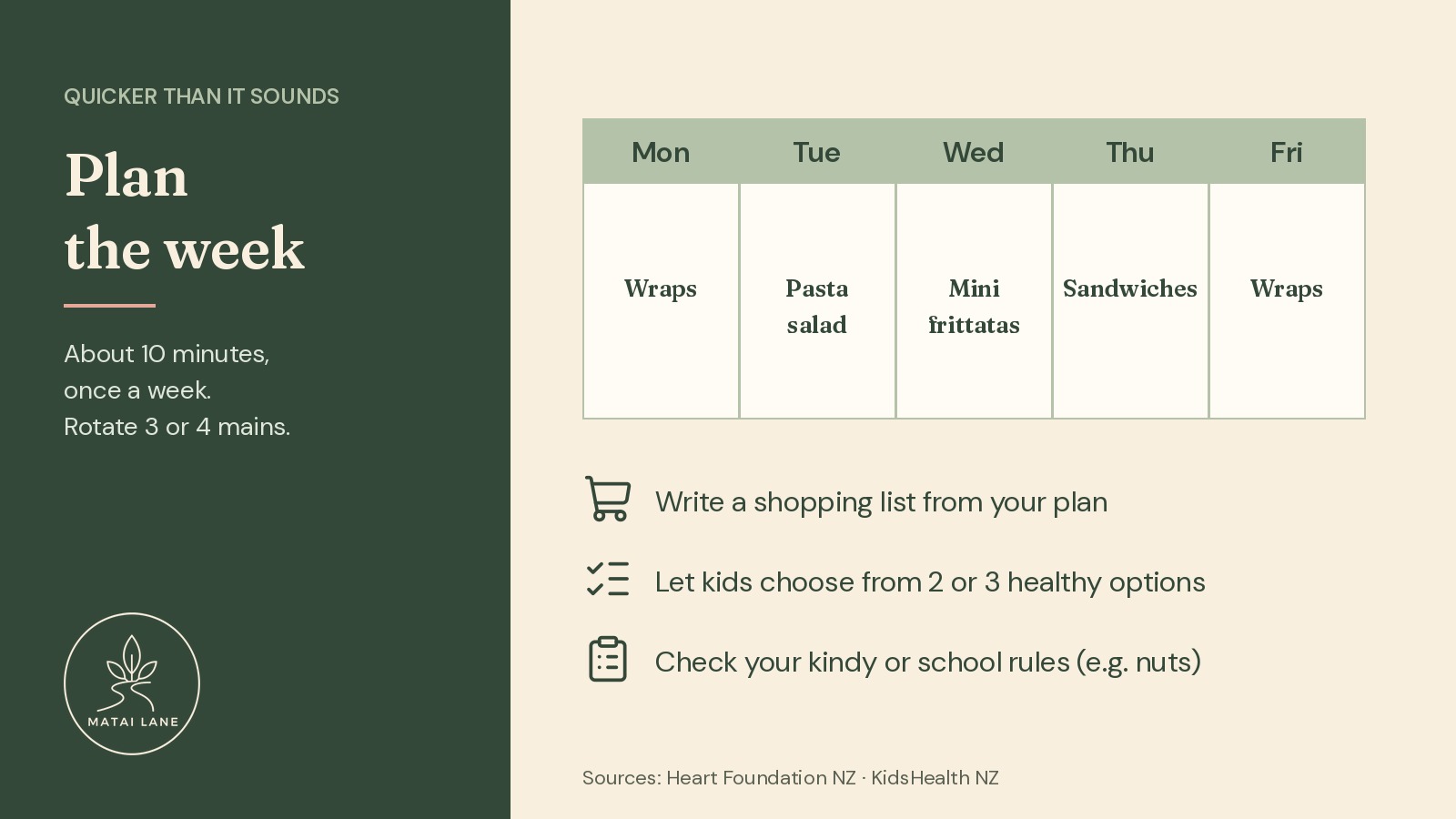
he Heart Foundation recommends taking about 10 minutes to plan each week and keeping things simple. Many families rotate a few go-to lunches rather than inventing something new every day. Our tips:
Pick 3 or 4 "mains" for the week, such as wraps, pasta salad, mini frittatas and sandwiches, and rotate them.
Write a shopping list from your plan so you're not scrambling on a Wednesday night.
Involve your kids. Let them choose between two or three healthy options. KidsHealth notes that involving children in choosing and making lunches makes them more likely to eat and enjoy it.
Check your kindy or school rules, for example whether nuts are allowed.
Prep ahead to save your mornings
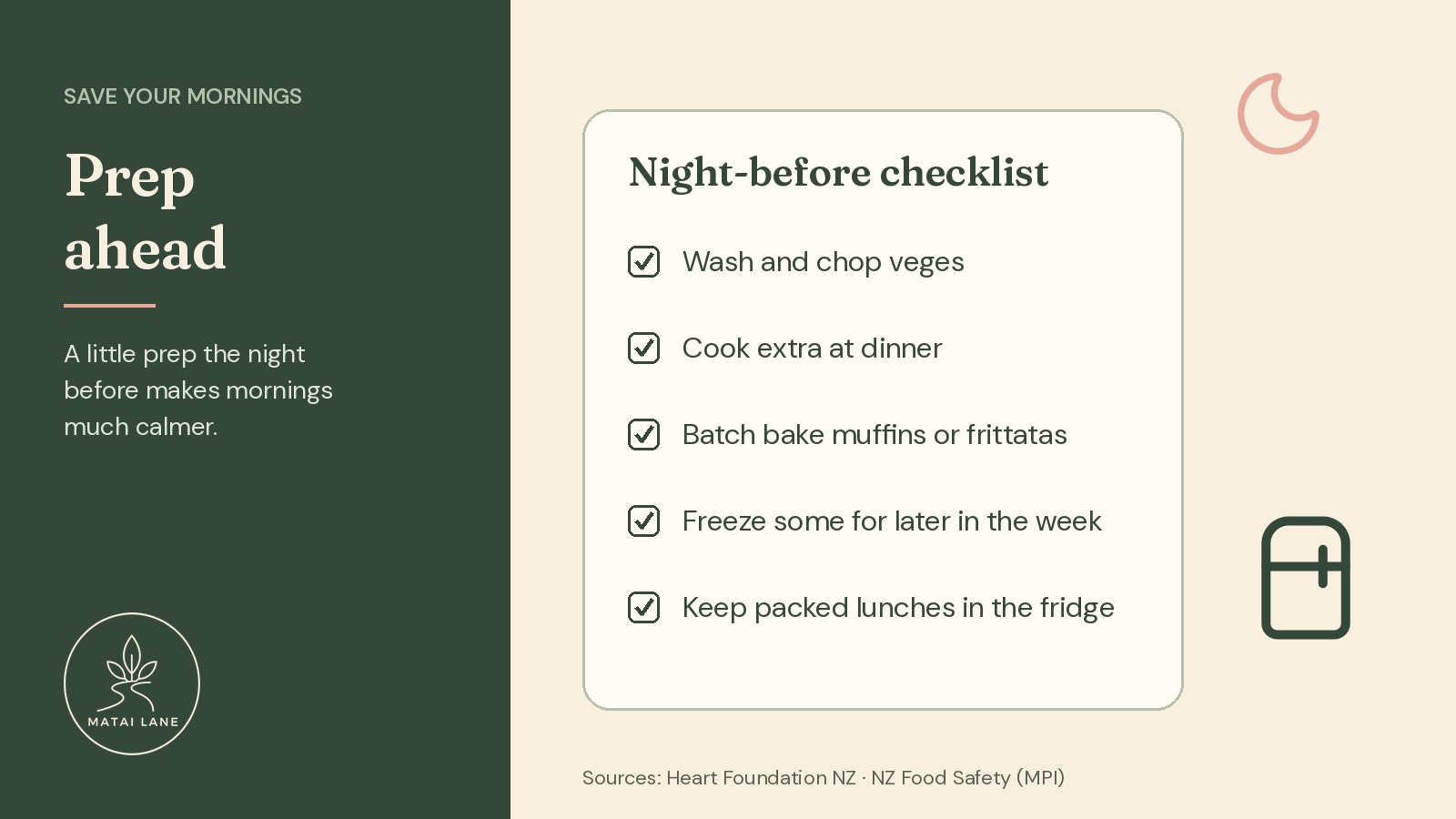
A little prep on the weekend or the night before makes weekday mornings much calmer:
Wash and chop veges and store them in the fridge, ready to grab.
Cook extra at dinner and use leftovers for lunch, as the Heart Foundation suggests.
Bake a batch of savoury muffins or mini frittatas and freeze some for later in the week.
If you pack lunches the night before, keep them in the fridge overnight (MPI).
Water is the best drink
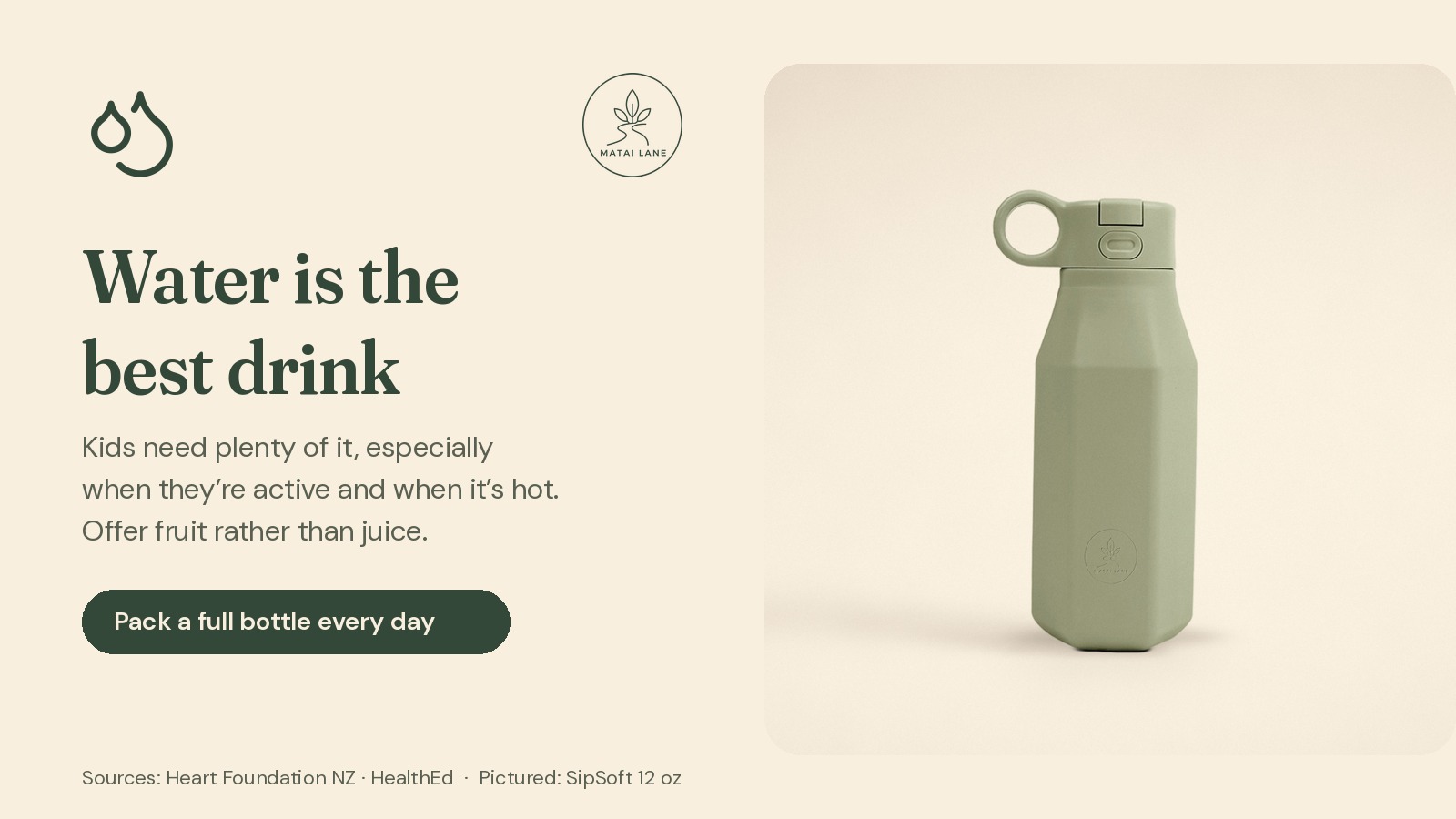
Both the Heart Foundation and HealthEd say water is the best drink for kids. Children need plenty of it, especially when they're active and when it's hot. HealthEd advises that fruit juice isn't recommended because it's high in sugar. Pop a full drink bottle in every day, and offer fruit rather than juice.
Keep it cool and clean
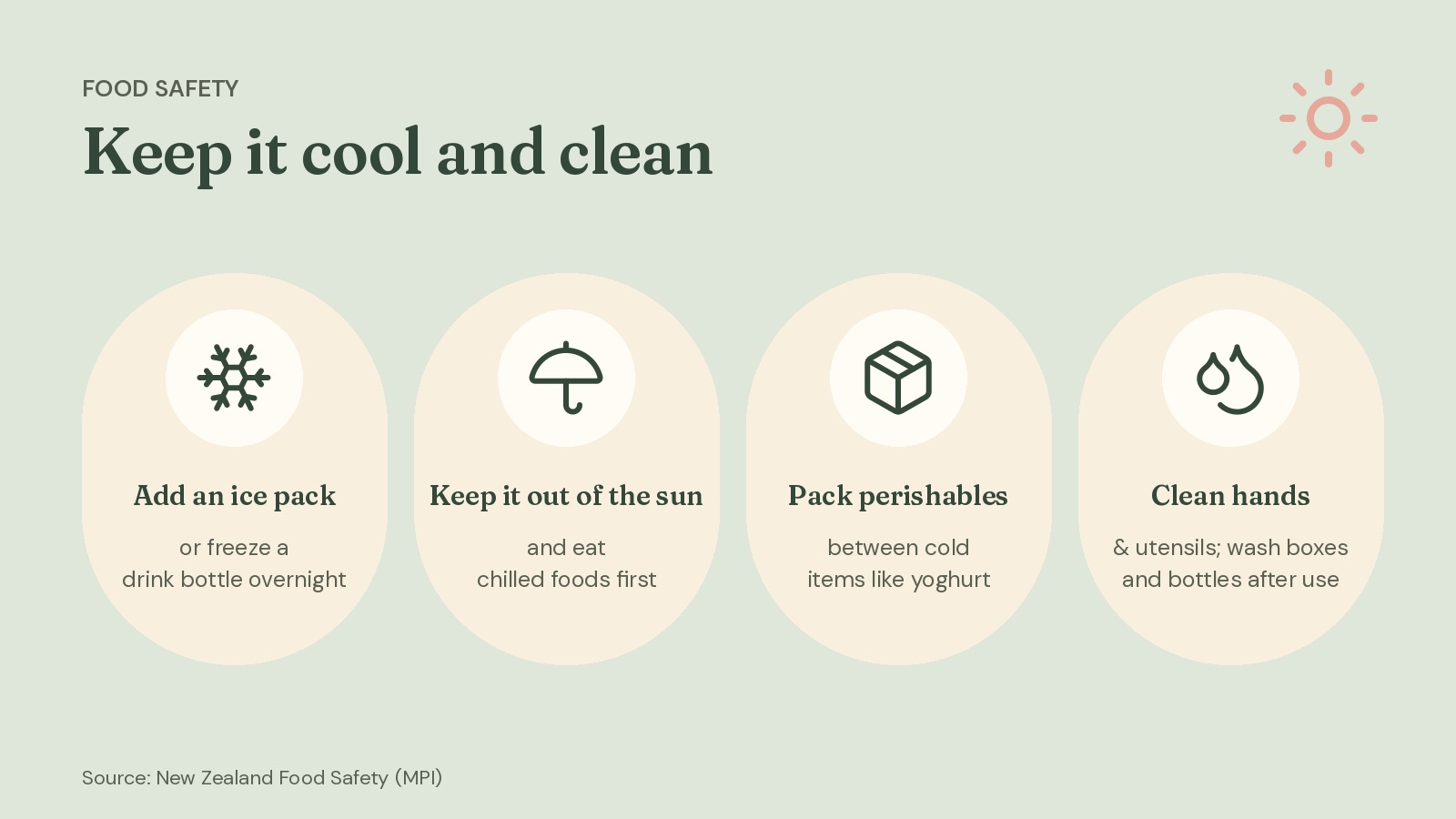
When lunches get too warm, food can become unsafe to eat. New Zealand Food Safety (MPI) recommends:
Making lunches with clean hands and utensils.
Adding a mini freezer pack (ice pack), or freezing a drink bottle overnight.
Packing perishable foods like cold meat or egg sandwiches between cold items like yoghurt.
Reminding kids to keep their lunchbox out of the sun and to eat chilled foods first.
Giving lunchboxes and drink bottles a good wash after use.
Choking safety for under-5s
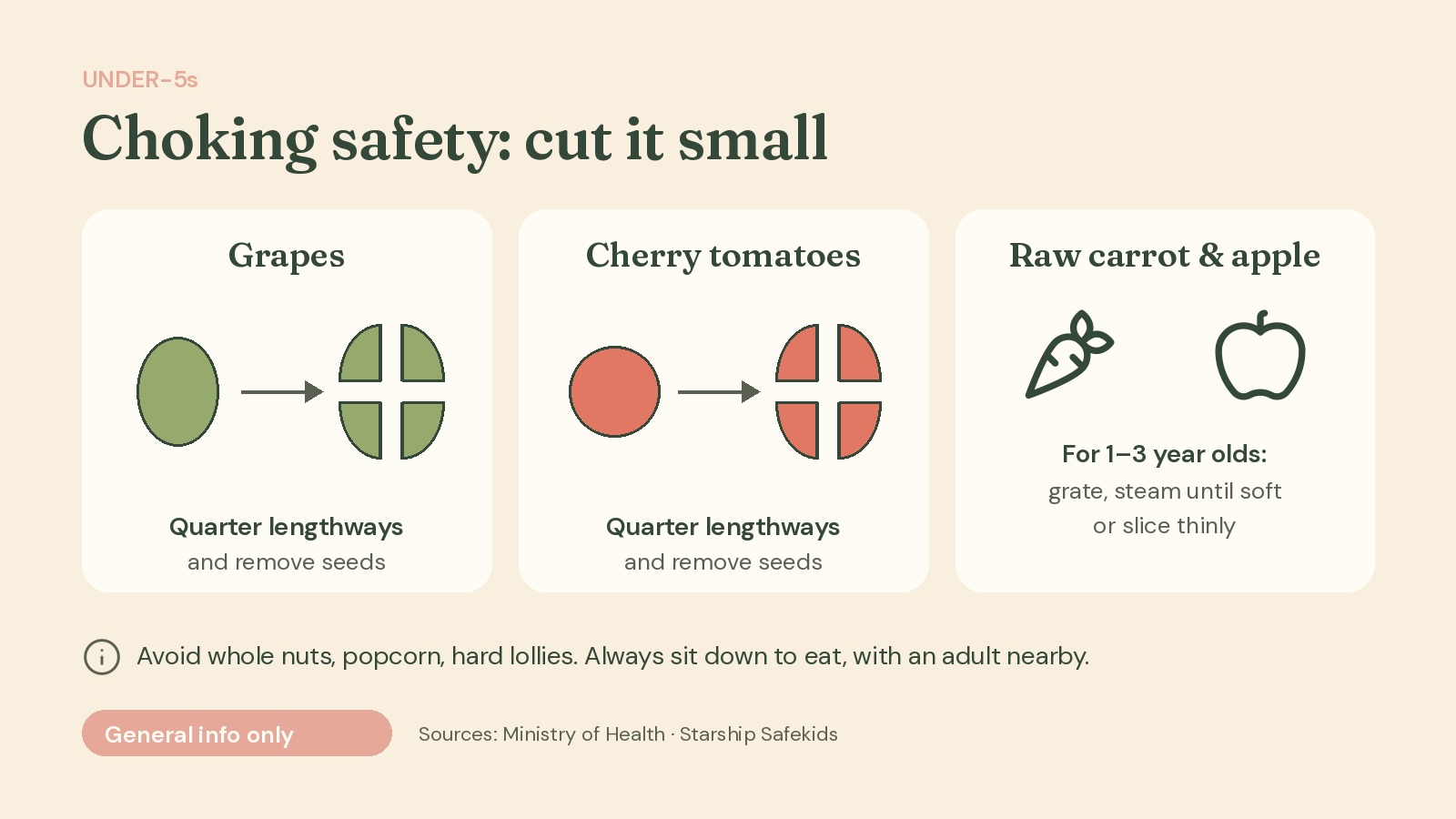
Children under 5 have a higher risk of choking because their airways are small and they're still learning to bite, chew and grind food (Starship). The Ministry of Health's guidance on reducing food-related choking and Starship recommend:
Quarter grapes and cherry tomatoes (cut them lengthways into quarters) for toddlers and under-5s, and remove any stones or large seeds.
Raw carrot and apple are choking risks for 1–3 year olds. Grate them, steam (cook until soft) or slice them thinly instead. From around 4–6 years, raw veges or fruit can be cut into sticks about 4–6 cm long.
Avoid high-risk foods for young children, such as whole nuts, popcorn, hard lollies, dried fruit and hard rice crackers.
Make sure children sit down to eat, with an adult nearby.
Our lunchbox and drink bottle
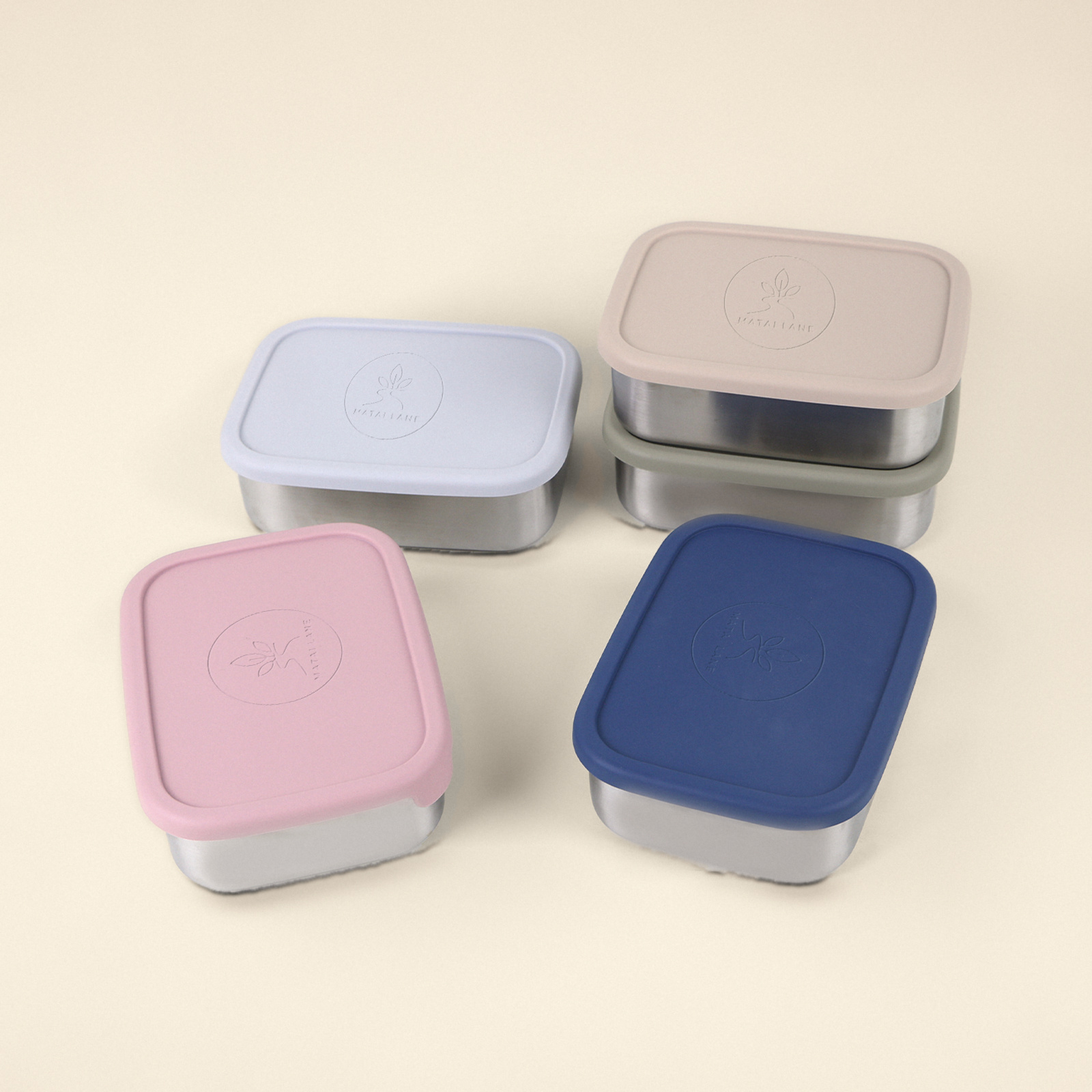
We started Matai Lane because we wanted lunch gear that made this routine a bit easier in our own house.
FlexiBento Steel: a 1200 ml lunchbox with 5 compartments, made from 304 (18/8) stainless steel. The separate sections make it simple to pack a little from each food group. Dishwasher safe, though we recommend hand washing.
SipSoft 12 oz drink bottle: made from BPA-free and phthalate-free food-grade silicone, so your little one always has water on hand. Dishwasher safe, with hand washing recommended.
We're launching in December 2026, so keep an eye on matailane.co.nz for updates.
Keep it simple
A healthy lunchbox doesn't have to be perfect. As the Heart Foundation puts it, what matters most is the overall balance of foods eaten across the day and week. Start with one small change and build from there.
General information only, check with your health professional for advice for your child.
Ngā mihi, Jinice, Hamish and the Matai Lane team
References
Heart Foundation NZ. Healthy lunchbox ideas for school and work.
HealthEd / Ministry of Health. Eating for Healthy Children aged 2 to 12 (HE1302).
Ministry of Health. Reducing food-related choking for babies and young children at early learning services (PDF).
Ministry for Primary Industries (New Zealand Food Safety). Keeping school lunches safe.
Starship Safekids. Choking prevention for babies and toddlers.
KidsHealth NZ. Healthy snack & meal ideas for children & young people.