
Happy Little Travellers: Summer Road Trip and Day Out Tips for Kids in NZ
Practical tips for summer road trips and days out with little ones in NZ: keeping kids hydrated, packing snacks, keeping food cool, car seat basics and being SunSmart.
Summer holidays in Aotearoa mean road trips, beach days, visits to whānau and long days out. With little ones in the back seat, a bit of planning makes the trip much happier for everyone. We're parents too (our little helper has strong opinions about snack stops), so here's what we've learned, backed by trusted New Zealand health and safety sources.
Water first
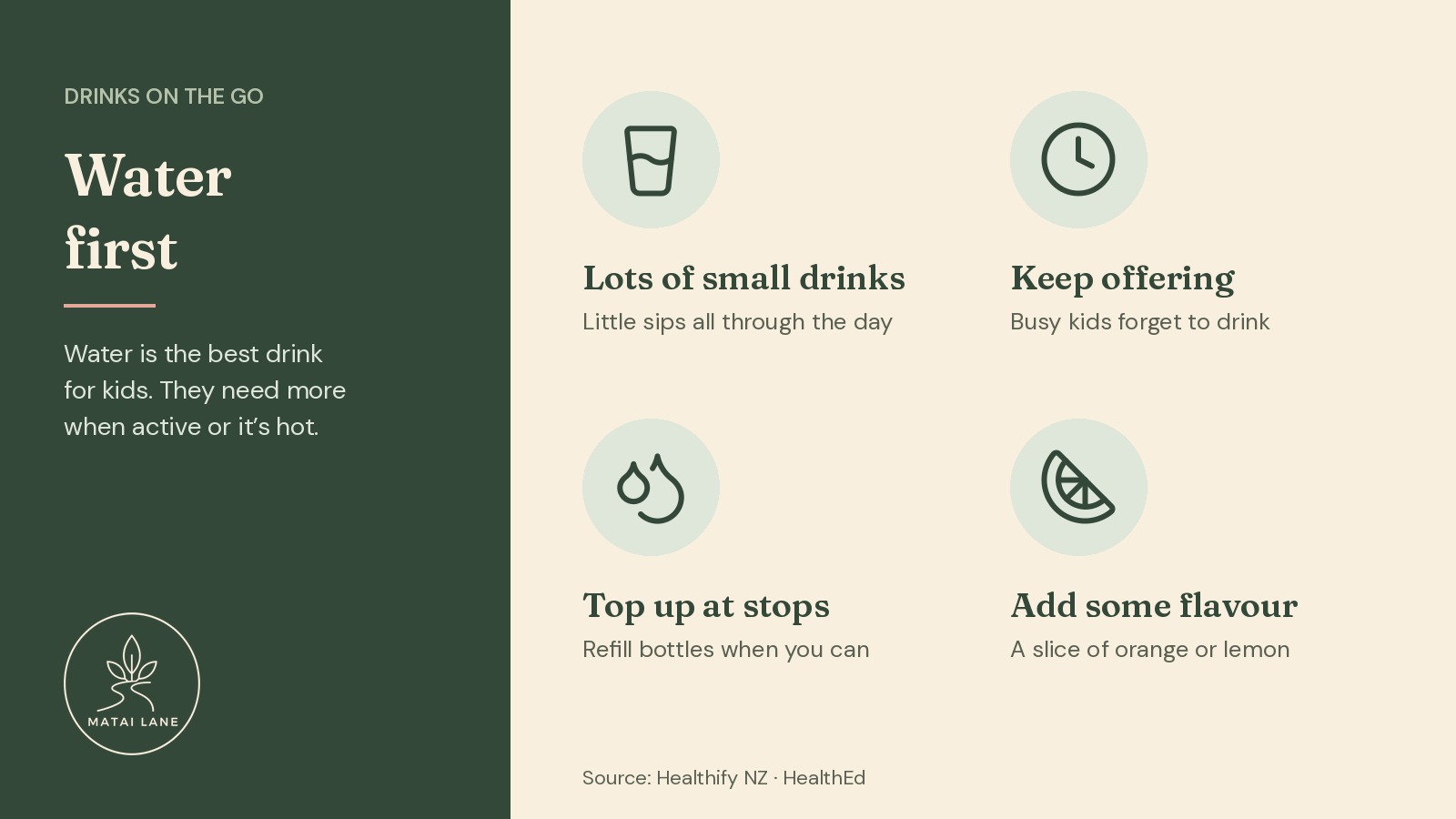
Healthify says water is the best drink for kids, and it's cheap and easy to get. Children need plenty of water and lots of small drinks through the day, and they need more when they're active or when it's hot. HealthEd also recommends water as the best drink for children.
Pack a bottle for every child and top them up at each stop.
Keep offering drinks. Busy kids can forget to drink when they're having fun (Healthify).
Add a little flavour if your child isn't keen on plain water, like a slice of orange or lemon.
Go easy on sugary drinks. Juice, fizzy drinks, cordial and sports drinks are high in sugar and are best kept as occasional drinks (Healthify).
Pack a snack bag
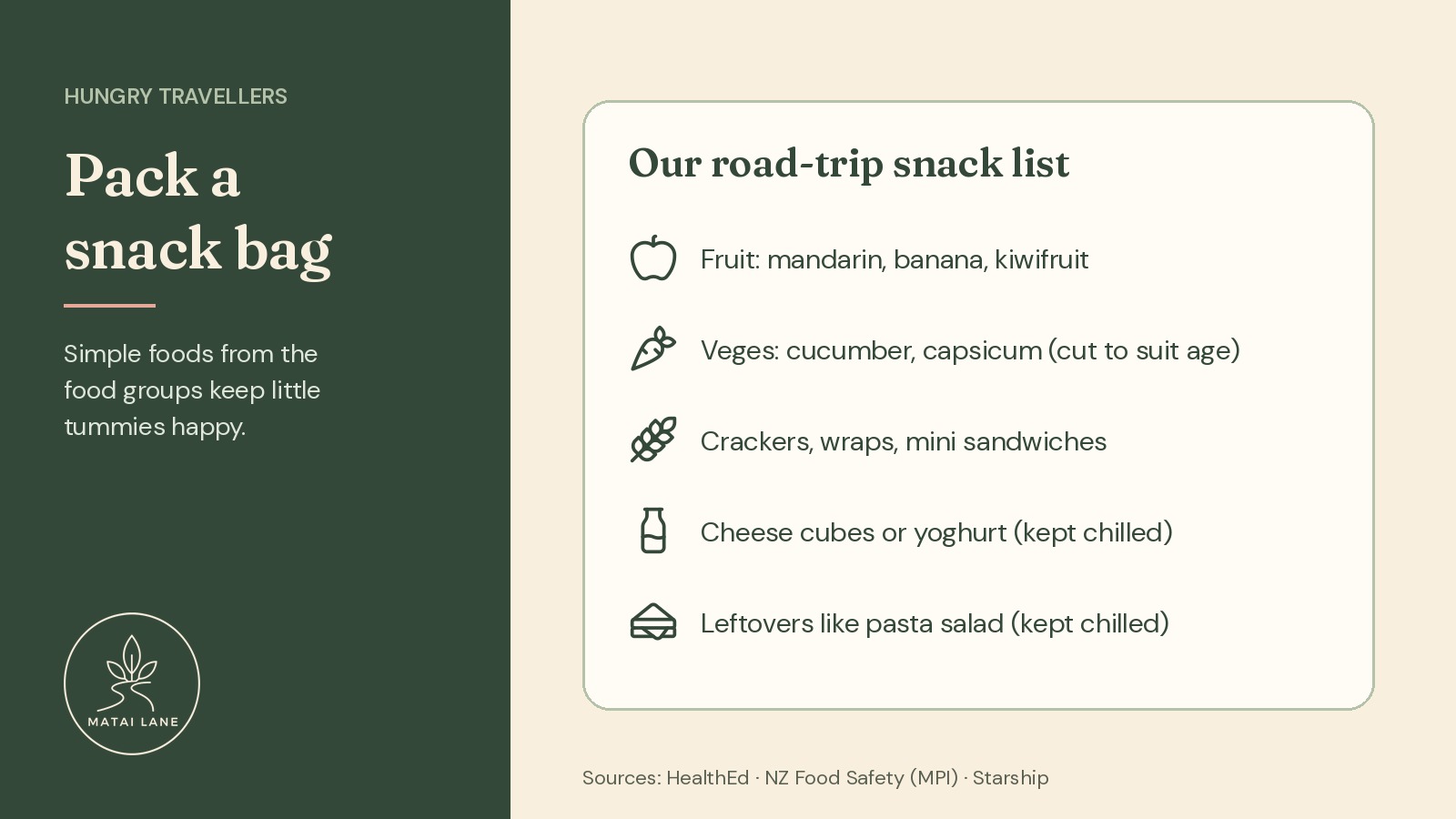
Hungry travellers are rarely happy travellers. A small bag of simple snacks from the food groups (HealthEd) goes a long way:
Fruit: mandarins, bananas, kiwifruit or apple slices.
Veges: cucumber or capsicum sticks.
Grain foods: crackers, wraps or mini sandwiches.
Dairy: cheese cubes or yoghurt, kept chilled.
Leftovers: pasta salad or mini frittatas, kept chilled.
For under-5s, cut food to suit their age. Starship recommends quartering grapes and cherry tomatoes, and grating, steaming or thinly slicing raw carrot and apple for younger children. It's best for kids to eat at a stop, sitting down, with an adult nearby, rather than while the car is moving.
Keep the chilly bag cold
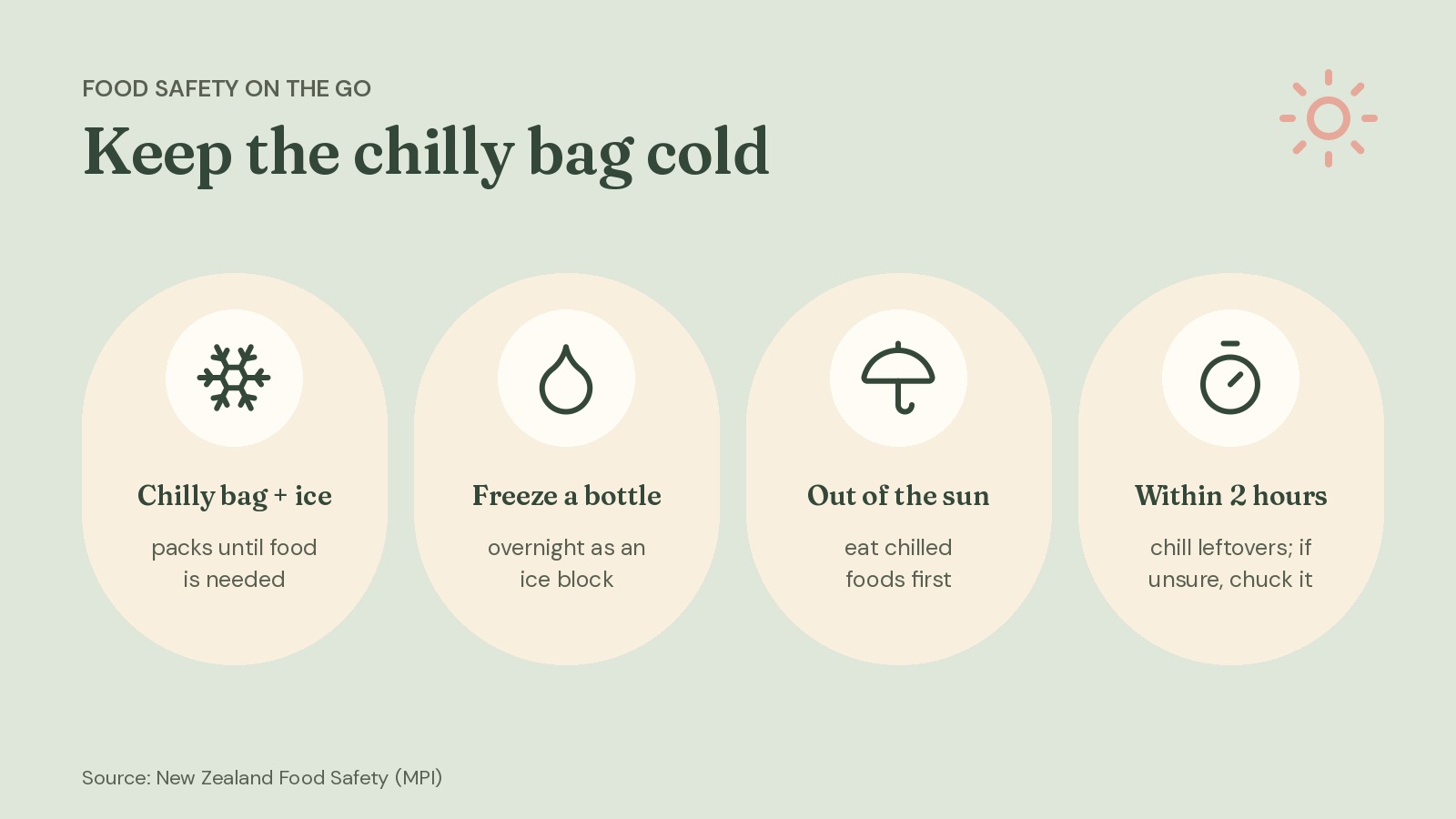
Cases of food poisoning usually rise over summer as people eat outdoors and travel more (New Zealand Food Safety). A few easy habits help:
Keep foods like meats, cheeses and salads in a chilly bag or bin with ice packs until they're needed (MPI).
Freeze a drink bottle overnight to use as an extra ice block (MPI).
Keep food out of the sun and eat chilled foods first.
Chill leftovers within 2 hours. The hotter the weather, the shorter the time food stays safe. When in doubt, chuck it out (MPI).
Pack wipes or hand-washing gear so little hands are clean before eating.
Car safety basics
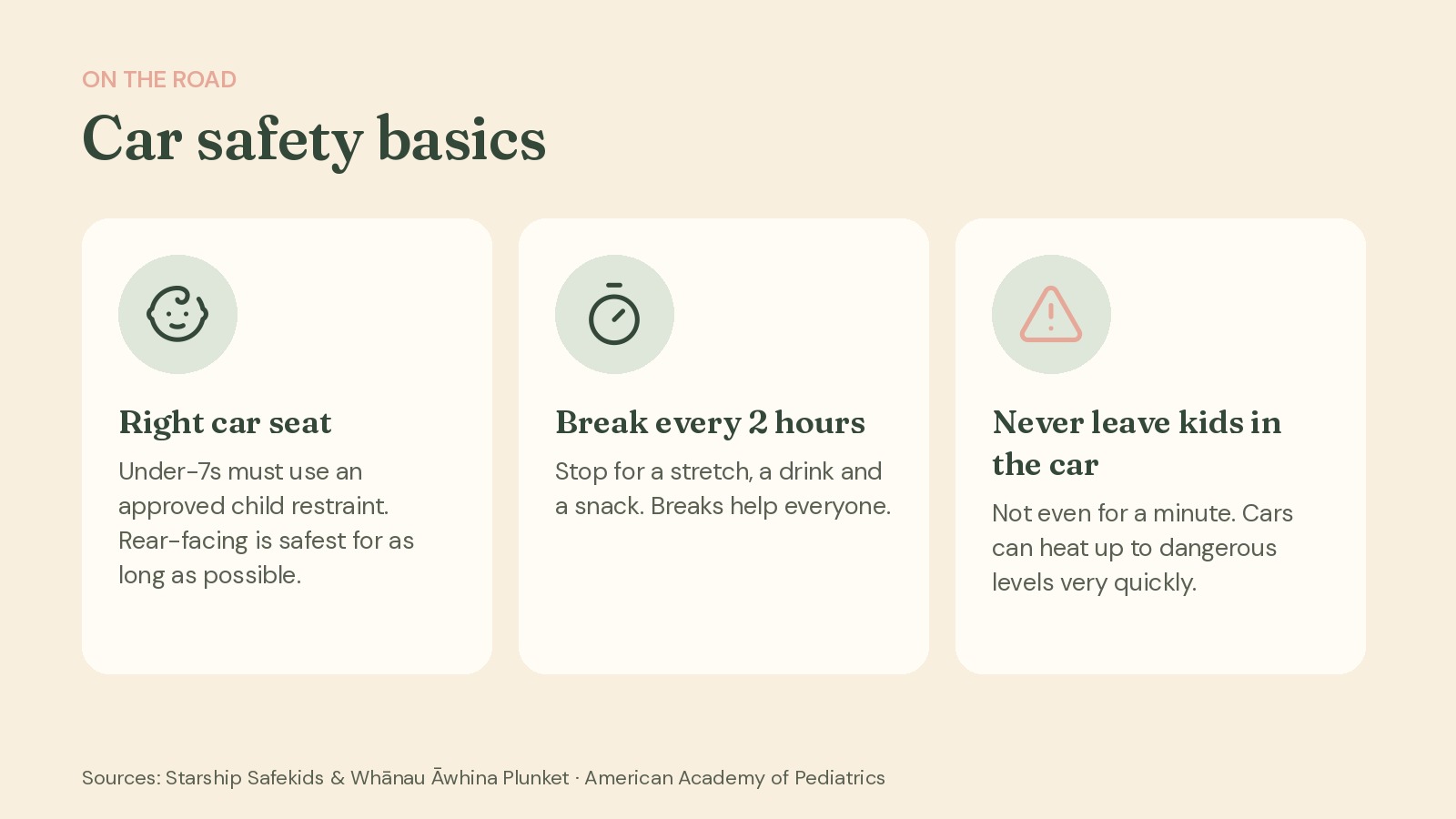
Use the right car seat. Under New Zealand law, all children under seven must use an approved child restraint suited to their age and size. It's safest for babies and toddlers to ride rear-facing for as long as possible, or until at least two years, and it's much safer for children to stay in a booster seat until they're 148 cm tall (Starship & Whānau Āwhina Plunket).
Do a quick check before you go. An installed car seat shouldn't move more than 2.5 cm in any direction, and you shouldn't be able to pinch the harness straps at shoulder height (Starship).
Plan a break about every two hours so everyone can stretch, have a drink and a snack (American Academy of Pediatrics).
Never leave your child alone in the car, not even for a minute. Temperatures inside a car can reach dangerous levels within minutes (AAP).
Bring a few soft, light toys and some favourite songs for a sing-along (AAP).
Be SunSmart on days out
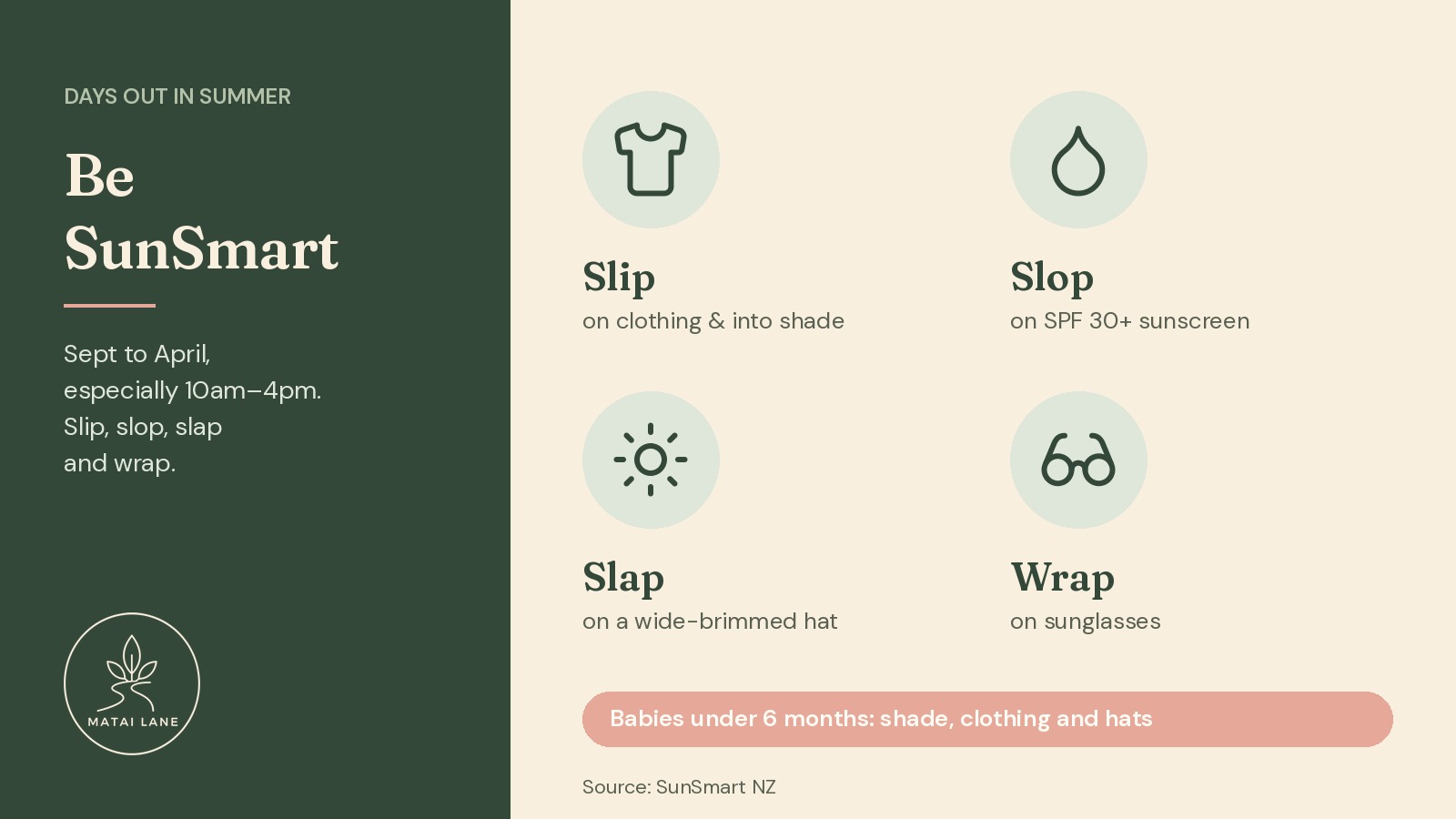
In New Zealand, UV radiation can damage skin and eyes from September to April, especially between 10am and 4pm (SunSmart). When you're at the beach, the park or a stop along the way:
Slip on clothing that covers as much skin as possible, and slip into the shade.
Slop on plenty of broad-spectrum, water-resistant sunscreen of at least SPF 30. Apply it 20 minutes before going out and reapply every two hours, or after swimming.
Slap on a hat with a wide brim or flaps covering the ears and neck.
Wrap on close-fitting sunglasses.
SunSmart doesn't recommend sunscreen for babies under six months. Keep them in the shade as much as possible, with clothing and a broad-brimmed hat (SunSmart).
Flying instead?
Pack a bag of toys and snacks for the flight. To help with ear discomfort on the way down, babies can feed or suck on a bottle, and older children can try drinking through a straw (AAP). If your child has had an ear infection or ear surgery in the past two weeks, check with your doctor before flying.
Our travel essentials
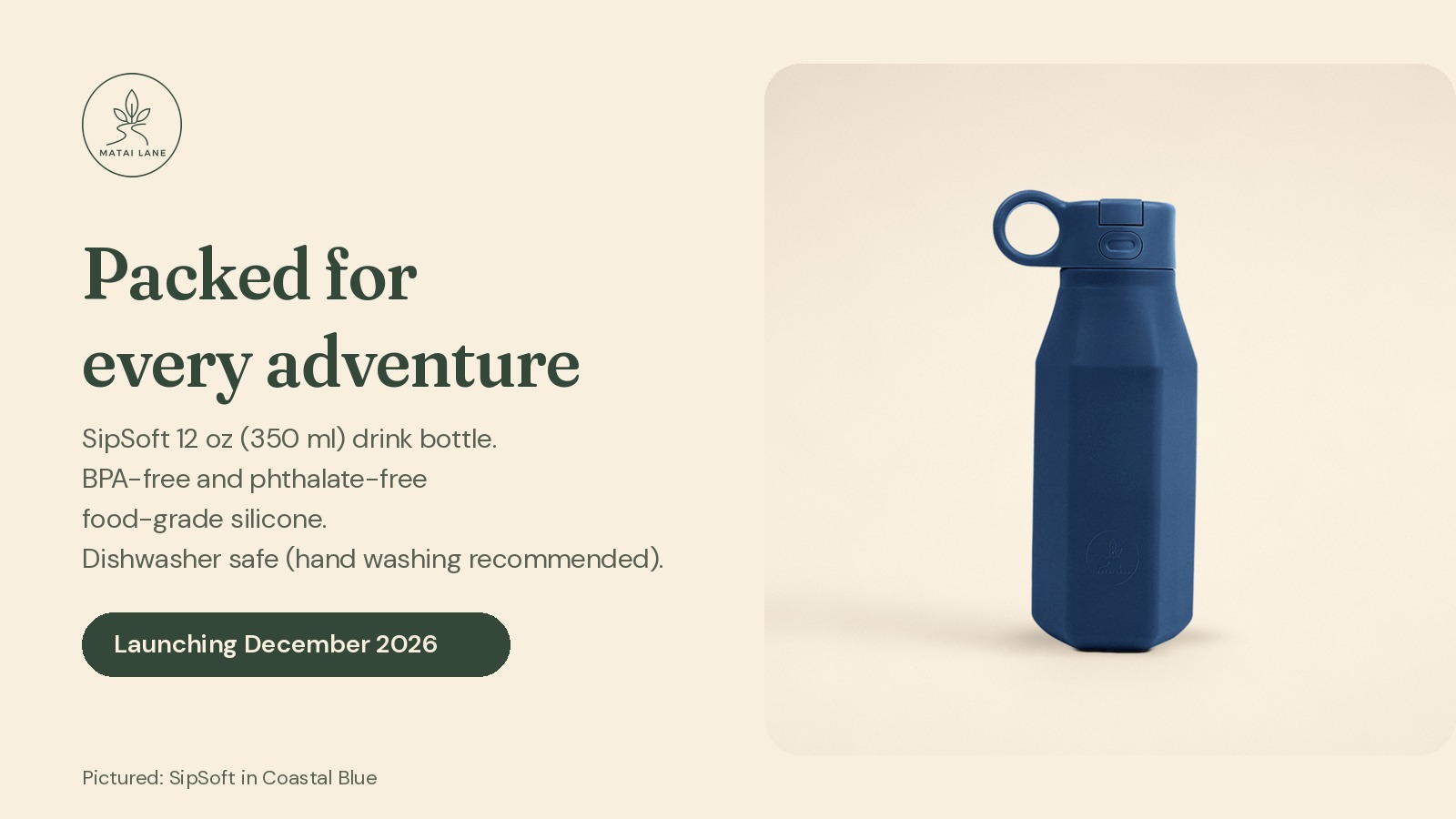
We designed our range for real family days out, from car trips to picnics on the beach.
SipSoft 12 oz (350 ml) drink bottle ($29.95 in our Flagship Hues, $31.50 in our Pastel Soft and Earthy Soft collections): made from BPA-free and phthalate-free food-grade silicone, and easy to pop in the car or day bag. Dishwasher safe, though we recommend hand washing.
SnackBook: keeps sandwiches tidy on the way, then opens into a plate at your picnic spot. Made from BPA-free and phthalate-free food-grade silicone.
FlexiEat: folds closed for the bag and opens into three sections, so fruit, veg sticks and crackers stay separate. Made from BPA-free and phthalate-free food-grade silicone.
We're launching in December 2026, so keep an eye on matailane.co.nz for updates.
Enjoy the journey
Trips with little ones won't always go to plan, and that's okay. Keep the water handy, the snacks close and the chilly bag cold, and build in plenty of stops. Happy travels this summer!
General information only. For advice about your own child, talk to your GP or Plunket nurse, or call Healthline on 0800 611 116.
Ngā mihi, The Matai Lane team
References
Healthify NZ. Drinks for kids.
HealthEd / Health New Zealand. Eating for Healthy Children aged 2 to 12 (HE1302).
New Zealand Food Safety (MPI). Serious food safety tips for the silly season (15 December 2025).
New Zealand Food Safety (MPI). Keeping school lunches safe.
Starship Safekids. Choking prevention for babies and toddlers.
Starship Safekids with Whānau Āwhina Plunket. Child car restraint safety.
SunSmart NZ. Be SunSmart.
SunSmart NZ. Slop on sunscreen.
American Academy of Pediatrics (HealthyChildren.org). Tips for safe & stress-free family travel.