Fussy Eaters? 6 Gentle Ways to Encourage Kids to Eat Healthy
Six small, pressure-free habits to help fussy eaters try new foods: eating together, offering foods again and again, cooking together, making food fun, and keeping drinks and treats in their place.
If dinner at your place sometimes ends with a firmly closed mouth and a plate pushed away, you're in good company. Fussy eating is really common in tamariki, and most children gradually eat and explore new foods as they get older (KidsHealth). We've had our own share of "no thank you" dinners too, and what helped most wasn't a clever trick. It was a handful of small, steady habits. Here are six of our favourites, backed by trusted New Zealand health sources.
Why fussy eating happens
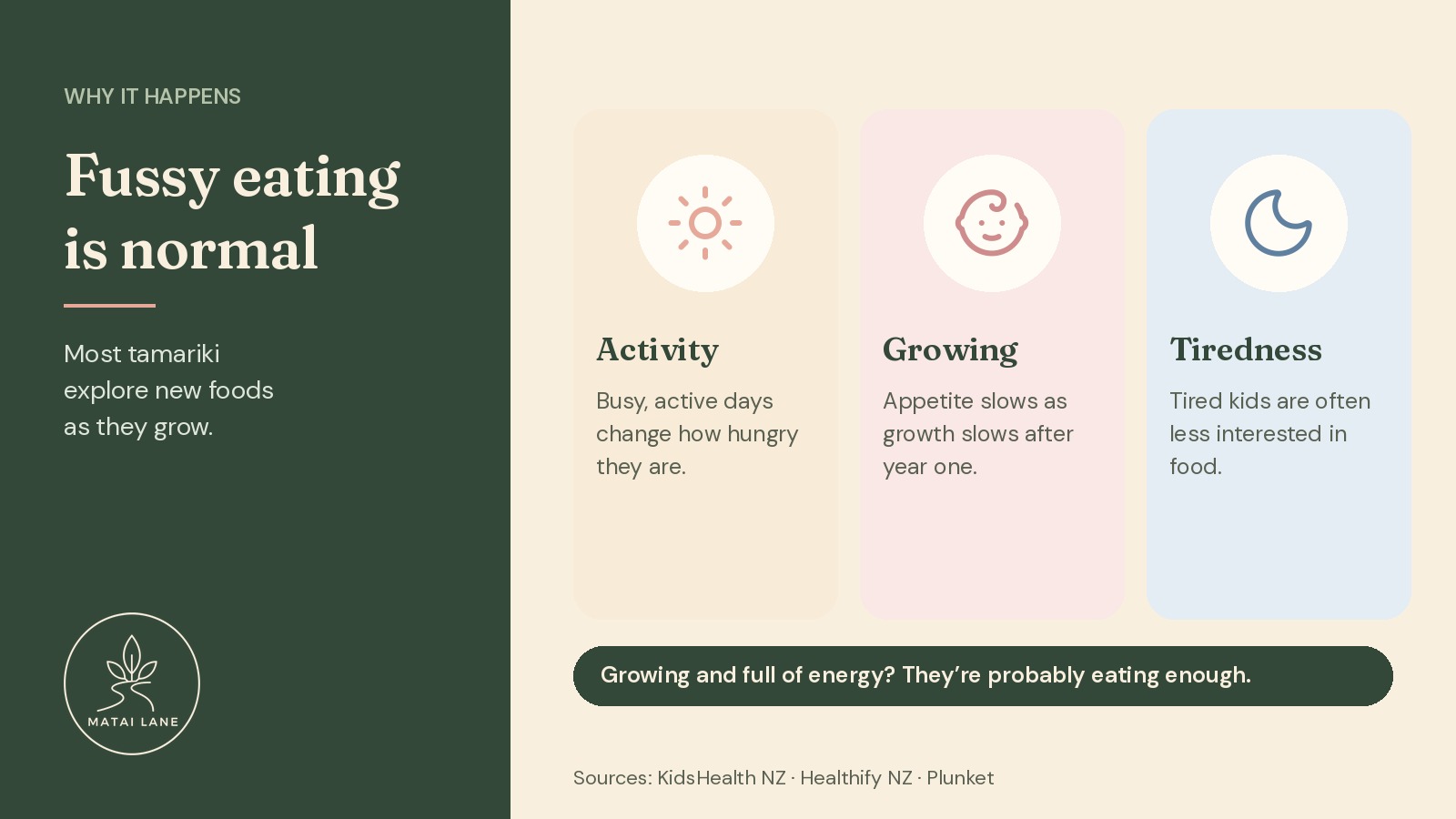
Little ones' appetites go up and down depending on how active they are, how much they're growing and how tired they feel (KidsHealth). For children aged 1 to 6, eating habits can change from day to day (Healthify). Toddlers' growth also slows in their second year, so it's normal for them to eat well one day and very little the next (Plunket).
Testing boundaries around food, like whether to eat or what to eat, is a normal part of development too (KidsHealth). If your child is growing and has enough energy to play, learn and explore, they're probably eating enough (KidsHealth).
1. Eat together and be the role model
Kids learn a lot by watching. When the whānau eats a range of healthy foods, it shows your child that everyone is willing to try new foods and enjoy them (Healthify). Whenever you can, sit down together, switch off the TV and leave phones somewhere else, and use mealtime to chat about the day (Healthify).
Children also enjoy company at the table, and they'll often try new foods around other children (Plunket). Try not to expect your child to eat foods that others in the family refuse (Plunket).
2. Keep offering new foods
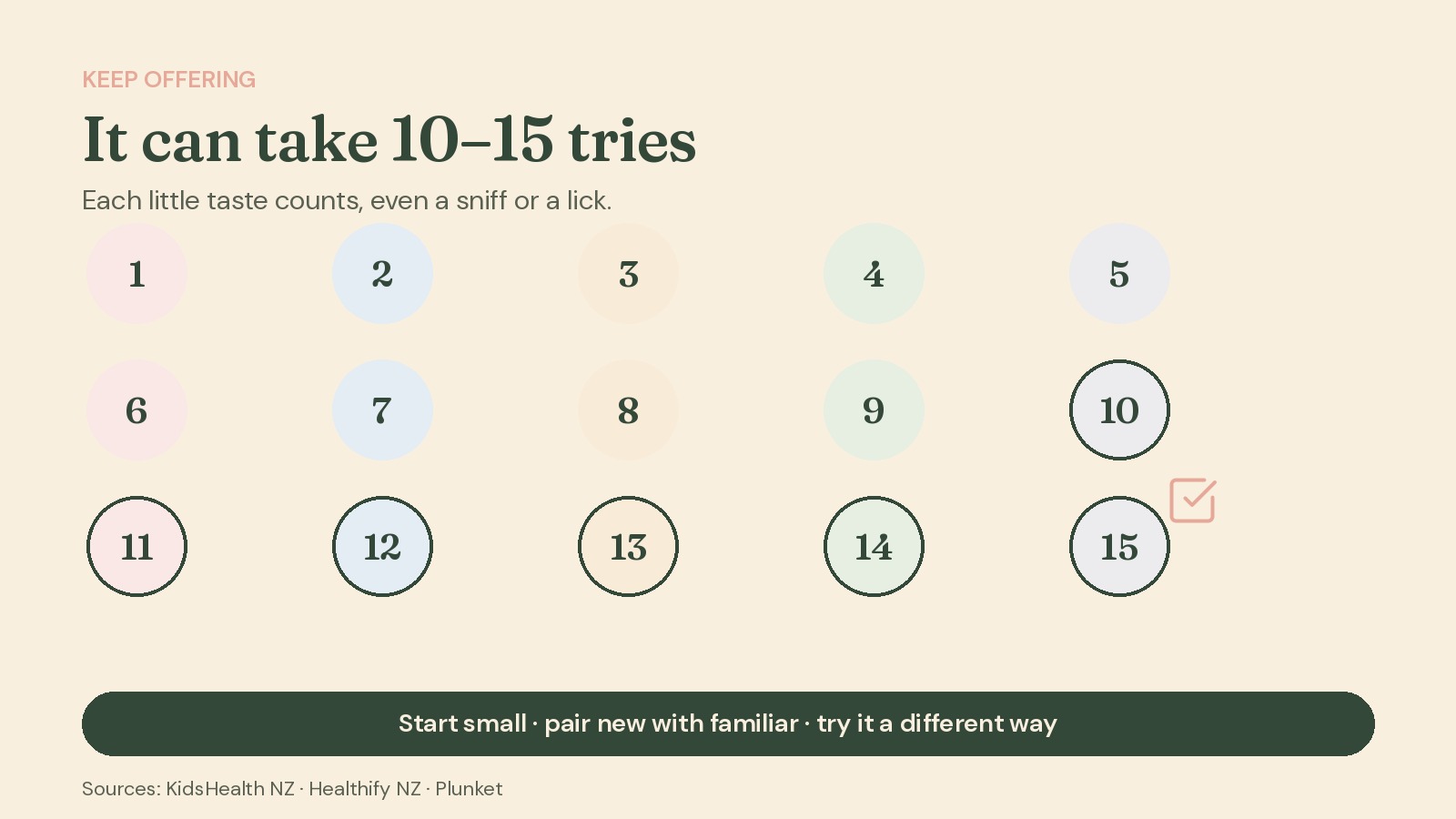
This one takes patience. It can take 10 to 15 offers of a new food before a child will accept it, so don't assume they don't like something after a few tries (KidsHealth). Plunket's toddler guide says the same: keep offering a variety of foods, even if they're rejected at first (Plunket).
Start small. A small amount on the plate feels less overwhelming (KidsHealth).
Pair new with familiar. Serving a new or disliked food alongside a favourite takes the pressure off (HealthEd).
Try it a different way. Raw grated carrot might go down better than cooked carrot (NHS).
3. Let them help in the shop and the kitchen
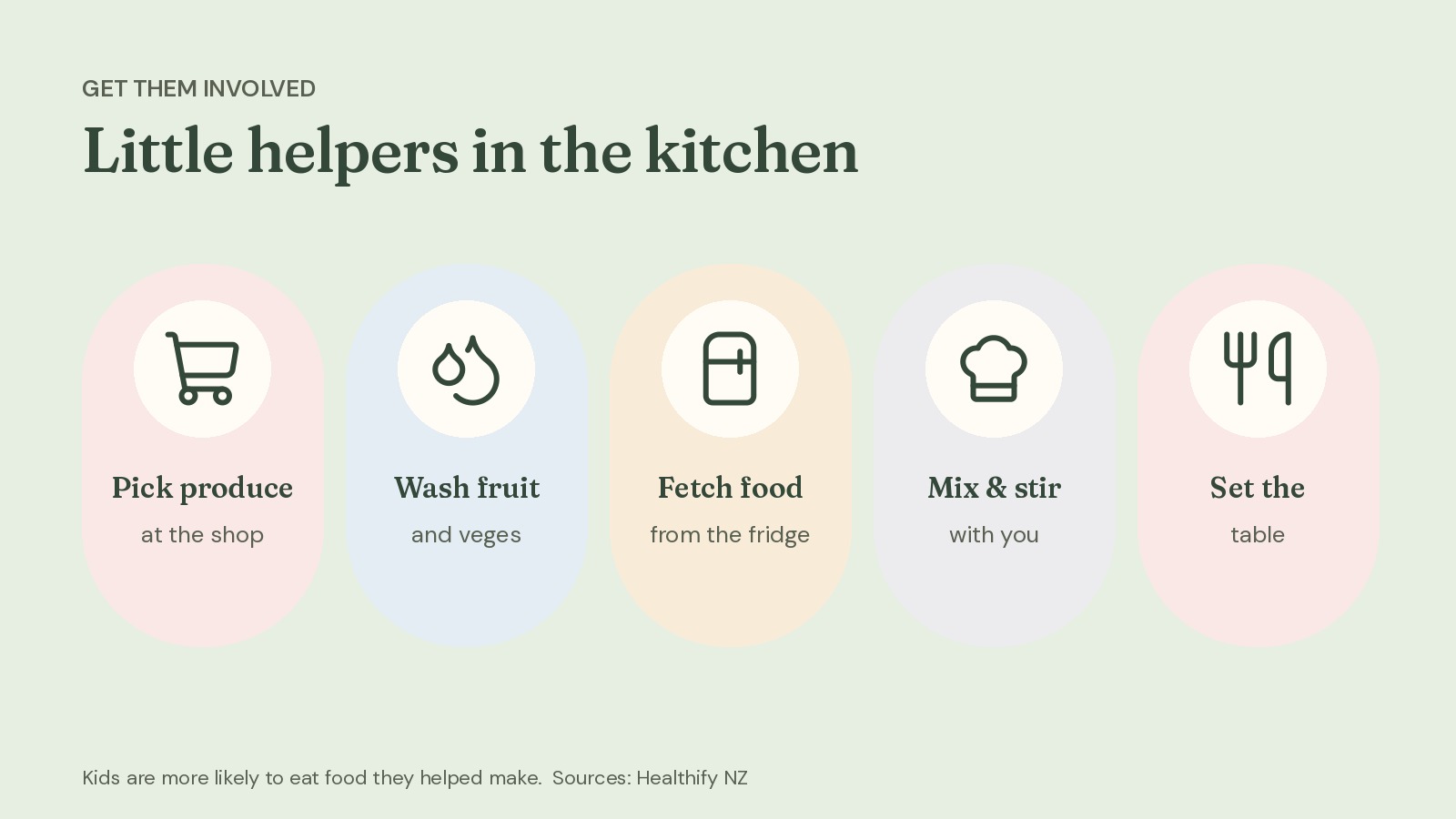
Children are more likely to eat something if they've helped make it (Healthify). Take them food shopping and let them pick some of the fruit and vegetables (Healthify). At home, little jobs work well:
washing fruit and vegetables
getting food out of the fridge or pantry
mixing things together
setting the table
planting and picking herbs or veges at home
All of these ideas come from Healthify's fussy eater advice (Healthify).
4. Make it fun
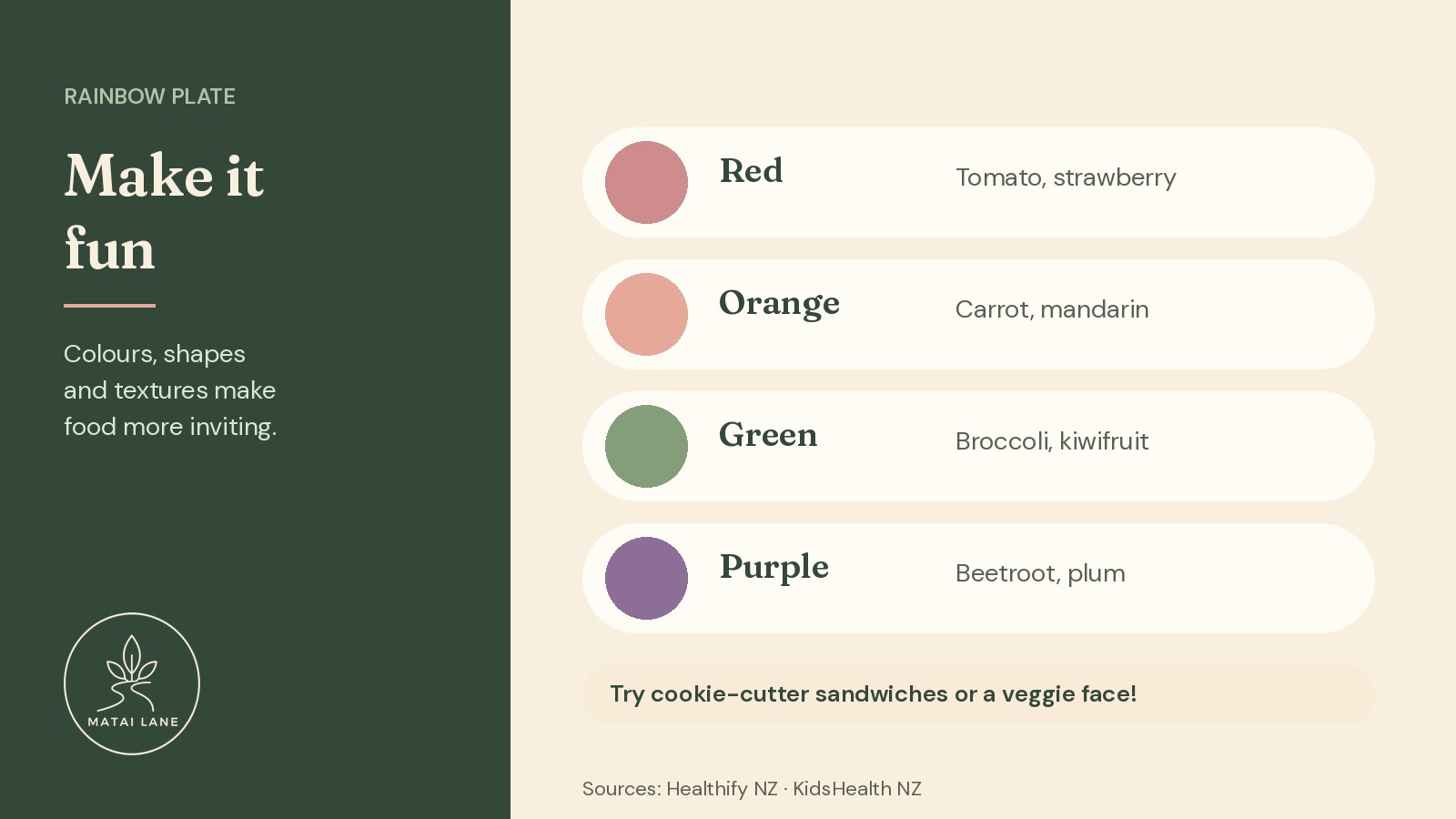
A bit of play makes food more inviting. Cut sandwiches into fun shapes with a cookie cutter, or use fruit and vegetables to make a funny face on the plate (KidsHealth). Aim for a mix of colours, shapes and textures (KidsHealth). Different coloured fruit and veges also bring different nutrients, so a rainbow plate is a good habit: think beetroot and plum, tomato and strawberry, broccoli and kiwifruit, carrot and mandarin (Healthify).
A divided plate can help here too. Keeping foods in their own sections lets children see each food clearly, and makes it easy to pop a small taste of something new next to a favourite.
5. No pressure: you decide what and when, they decide how much
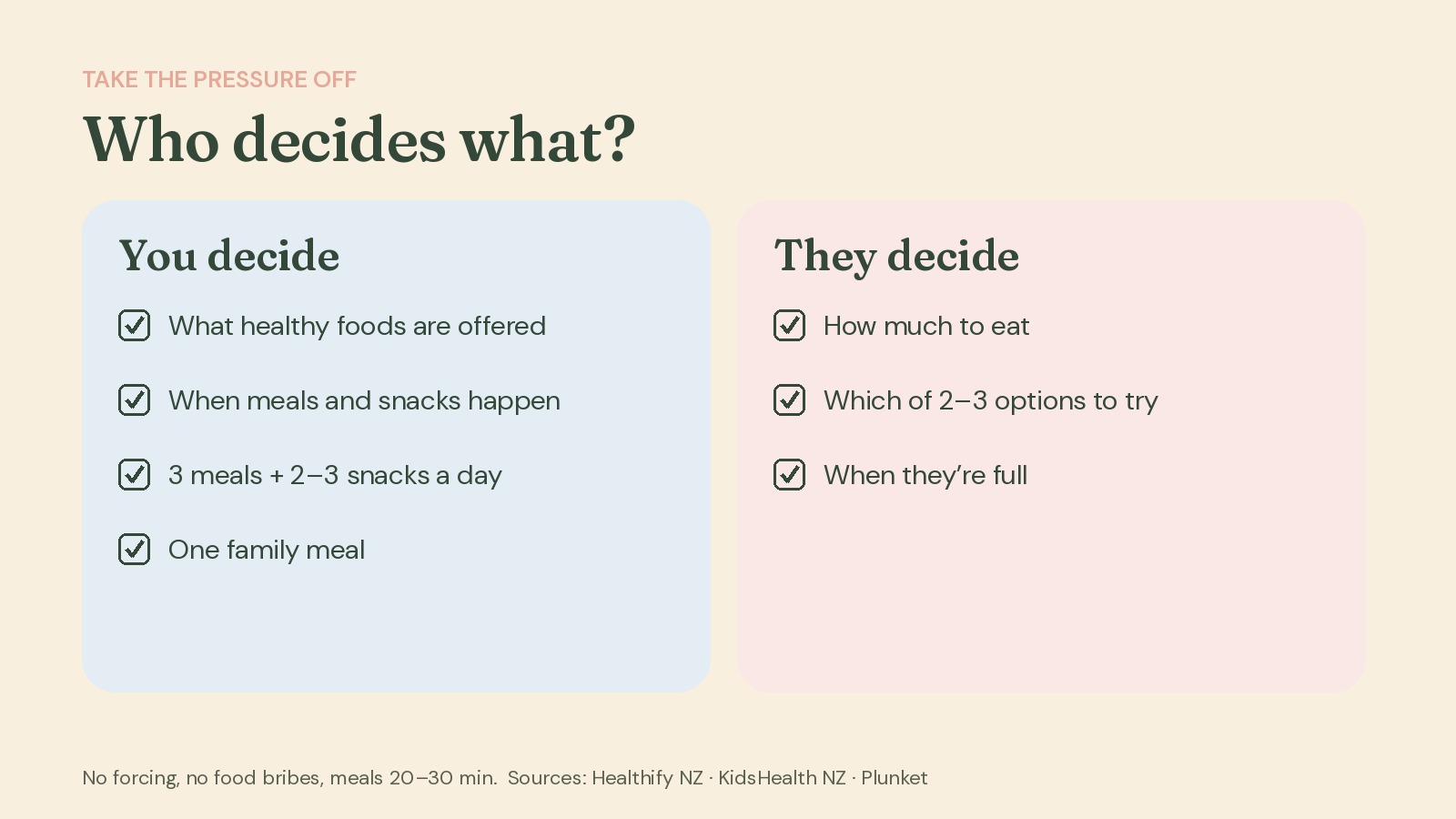
This is the big one. You choose the healthy foods on offer and when meals and snacks happen. Your child chooses how much to eat from what you've provided (Healthify, Plunket).
Keep a routine. Offer 3 meals and 2 to 3 snacks a day, with a gap of at least 2 hours so they come to the table hungry (KidsHealth).
Offer 2 to 3 choices, not the whole pantry, so they don't get overwhelmed (Healthify).
Never force a food. Stay calm, and if it's not eaten, take it away without fuss (KidsHealth).
Keep meals to about 20 to 30 minutes (KidsHealth).
Skip food rewards and bribes. Praise something they did well instead, like good sitting or exploring a new food, or offer an extra bedtime story (Healthify, Plunket).
One family meal. If they refuse, there's no need to make something different (HealthEd).
6. Water first, treats now and then
Drinks can fill small tummies fast. Offer drinks halfway through and at the end of a meal rather than before KidsHealth, and keep milk to about 2 small cups (around 350 ml) a day for toddlers, as too much can spoil their appetite (Plunket). Water is the best everyday drink, and fruit juice is best kept limited (Healthify).
Treats are fine for special occasions. Using them to get a child to eat their veges can make the treat even more appealing (Healthify).
A set that makes mealtimes a little easier
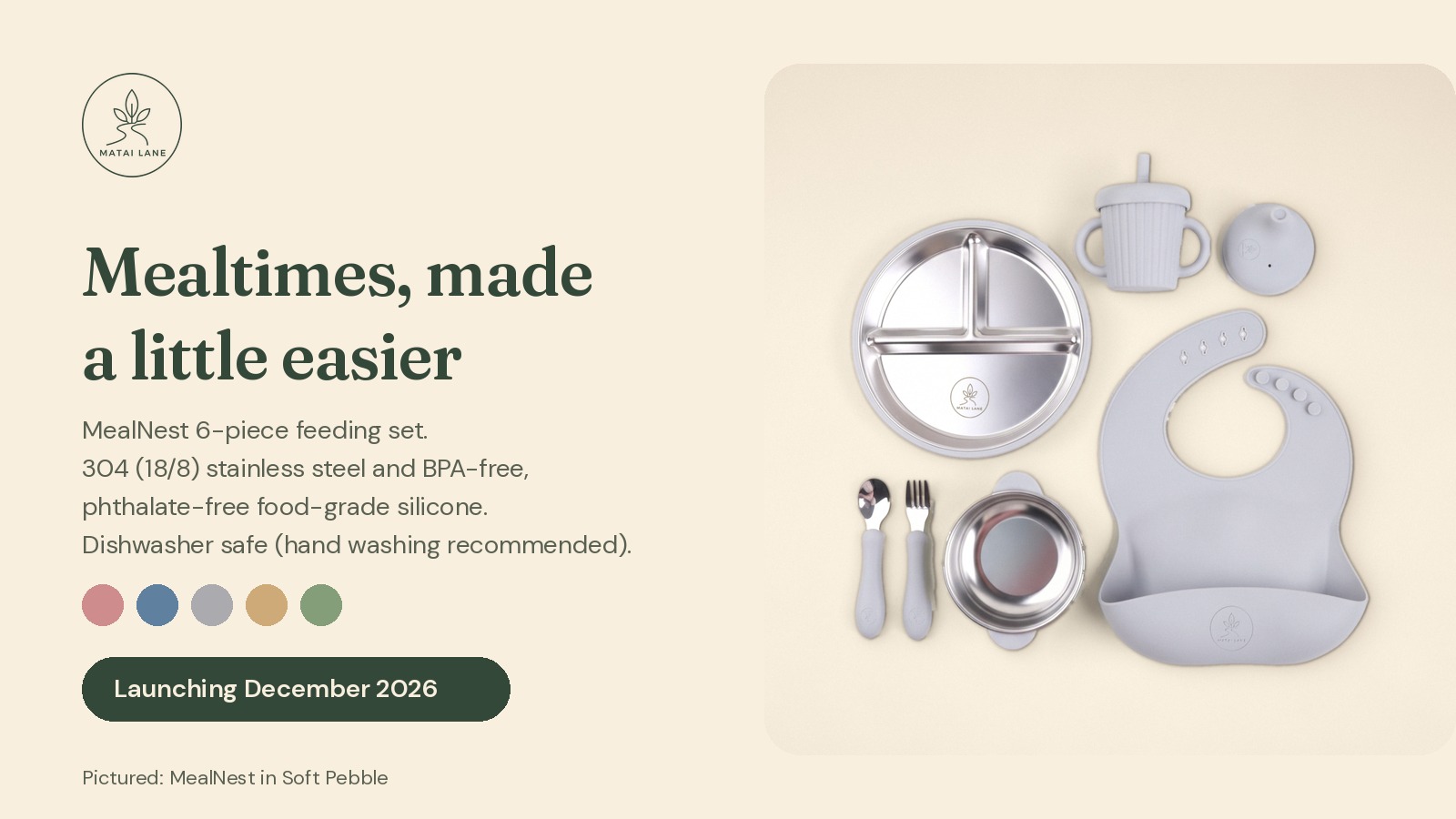
We designed our MealNest set for those early years of learning to eat.
MealNest 6-piece baby feeding set ($84.95): includes a divided plate, a bowl, a cup, a bib and a spoon and fork. It's made from 304 (18/8) stainless steel and BPA-free, phthalate-free food-grade silicone, and comes in five Flagship Hues: Dusty Blossom, Coastal Blue, Soft Pebble, Warm Sand and Sage Mist. Dishwasher safe, though we recommend hand washing.
FlexiEat and SnackBook are handy for picnic plates and snack boxes once your little one is on the move.
We're launching in December 2026, so keep an eye on matailane.co.nz for updates.
When to get help
Most fussy eating is a normal phase. But if your child is losing weight or not gaining weight, eats only a very small range of foods, or seems fearful or distressed around food, see your healthcare provider as soon as possible (KidsHealth, Healthify).
Small steps, happier mealtimes
There's no perfect dinner. Keep offering, keep it relaxed, and celebrate the small wins, like a single lick of broccoli. Over time those little steps add up.
General information only. For advice about your own child, talk to your GP or Plunket nurse, call PlunketLine on 0800 933 922, or call Healthline on 0800 611 116.
Ngā mihi, The Matai Lane team
References
Healthify NZ. Fussy eaters.
Healthify NZ. Healthy eating for children.
Healthify NZ. Food groups and serving size – children.
KidsHealth NZ. Fussy eating in children.
KidsHealth NZ. Healthy eating for children and young people.
Health New Zealand / Plunket. Food guide for Pacific babies and toddlers (HE2650).
NHS (UK). Fussy eaters.